
Bardsey Island (Ynys Enlli in Welsh) is situated off the tip of the Lleyn Peninsula (Penllyn), separated from the Welsh mainland (Y Tir Fawr) by only a short sea crossing, but it could be many miles away. With its remote location, the island tends to attract rare migrants; it also has a manx shearwater colony and a bird observatory. Together with Jane (my partner) and three good friends, I spent last week there. It was actually my seventh stay on the island; each week has been quite different and I well my remember my first. I picked up an infection, probably from the spring water supplied to the houses, which laid me low for a few days. Alone in my accommodation, I felt very ill indeed and believed I could have died there without anyone knowing! Fortunately in recent years a water purification system has been installed.
After another visit I was chatting to a Welsh-speaking neighbour and told her I had just spent a week on Enlli. She looked at me very strangely, and then explained that Enlli is the name of the psychiatric ward at the local hospital. I’ve always used the name Bardsey since then…….
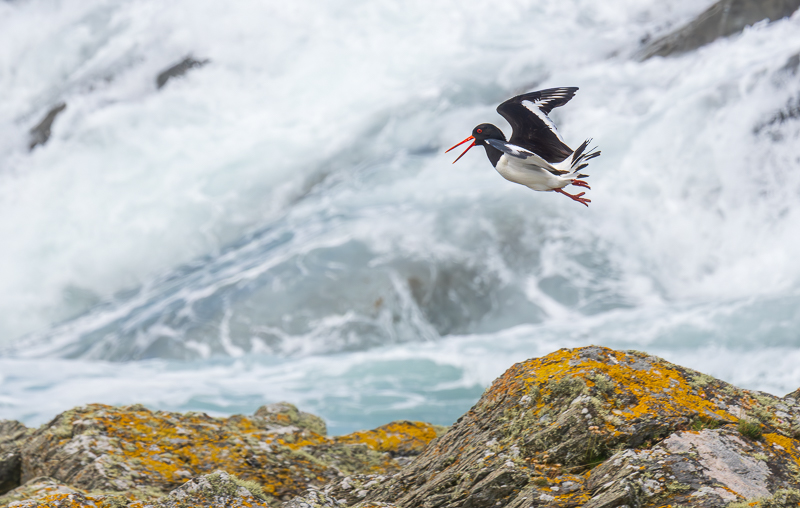
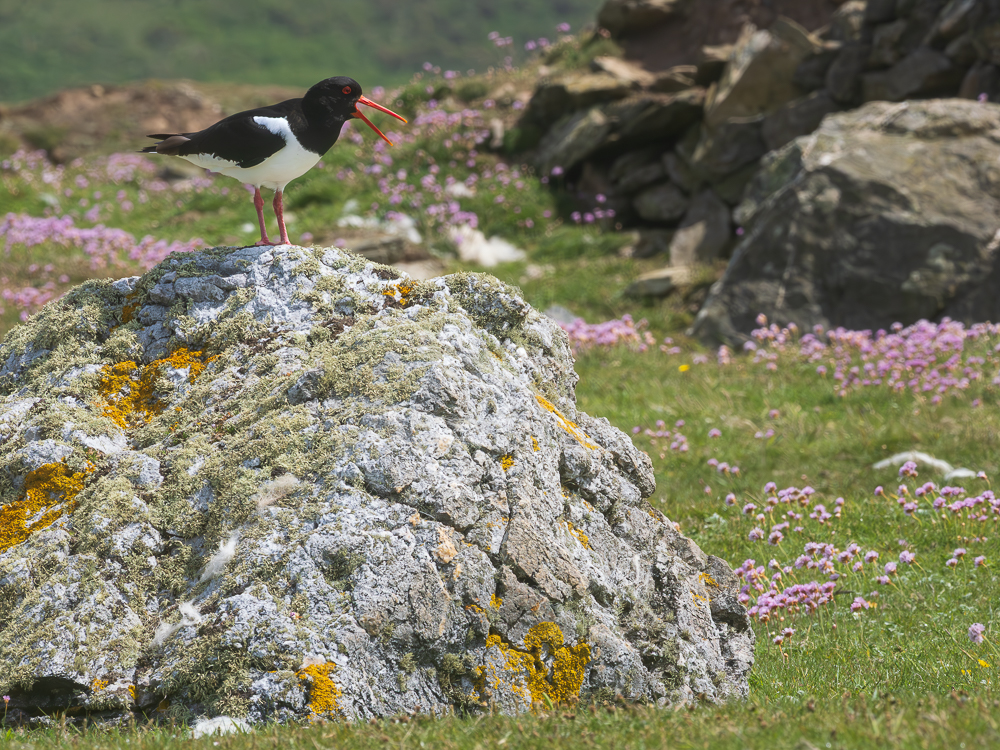
I don’t usually resort to cliches such as “bird of the week” but just this once I’m going to. It could have been the (scarlet) rosefinch which my friend Jonathan first identified, and whose song could be clearly heard from our kitchen table for a couple of days. The island has a large population of my favourite bird, the chough, and their calls could frequently be heard wherever you were. But the chough is a Schedule One (specially protected) species during the breeding season so I tended to avoid them. So I’m going to plump for something much more familiar – the oystercatcher. As you walked around the island you would pass from one oystercatcher territory to the next, and you would be subject to a new tirade of raucous high-pitched screeching. One bird was particularly aggressive, repeatedly flying noisily towards me at eye-level and only veering away at the last second. I believe on one occasion its wing tip brushed my arm as it flew past.
Their behaviour and alarm-calling is designed to alert their youngsters of the presence of a potential predator (in this case me) and it is obviously very successful. No matter how hard I tried I never managed to locate a single chick. They leave the nest as soon as they hatch and must hide amongst the pebbles and boulders amongst which they are feeding. But I wondered how intelligent the adults actually are. I found that while I was standing upright I was fair game for all the aggression that they could muster. But if I made a half-hearted attempt to “hide” or lower my profile their behaviour became calmer and their calling quieter. It was during these moments that I was able to photograph them in a more relaxed fashion. I ended up with hundreds of oystercatcher images, and have spent many hours deleting and processing them since I returned home.
It was during these lulls in activity that also I coined a new name for the species – “pipsqueaks”. After all, they don’t actually eat oysters ………….
Enjoy…….


Please click the Follow button if you would like to receive more Tales from Wild Wales as they are published.
My website : www.wild-wales.com
 Tales from Wild Wales