Some reflections on my Pembrokeshire trip.

After a session trying to photograph St Davids Cathedral (click to read), I decided to go for a coffee. It was while I drank it that I had a brain wave. Why not take a wildlife cruise out from St Justinians later in the day? Conditions seemed perfect. So I compared the options available from the various boat operators in St Davids and chose a ninety minute “evening shearwater cruise” leaving at 6.30 p.m. I was so sure I would have some great photographic opportunities from the boat that I slouched around the St. Davids area for most of the day. I suppose some measure of complacency had crept in.

Come 6.30pm I boarded the boat. It was a RIB with fixed seats and once seated the punters were expected to stay in place. The boatman told us that “every seat is a front row seat”. The company owner was on board with four of her friends; needless to say they had the best seats – at the front. We were then informed that – actually – there were very few shearwaters around at the moment. Once underway we did a clockwise half-circuit of Ramsey Island: this meant that those in the seats on the starboard (right-hand) side of the boat (and the front…..) had uninterrupted views of the few seals in the caves and coves. I was on the port side – and it was very frustrating. Then we headed a couple of miles offshore to search for shearwaters, and there were a few, but all very distant. It also occurred to me that there were hardly ANY seabirds around at all. I should have known better than to book a wildlife cruise at the end of August when most of the seabirds would have left the cliffs several weeks earlier.

But the boat company should have warned potential passengers that this would be the case. Falcon Boats was the culprit in this instance but I’m sure they all do it. I’ll certainly be far more careful before going out on a tourist boat again.

I recounted in this post how I managed to get some good photographs of an osprey from the Curlew hide at the Teifi Marshes on the journey down. There were other photographers in the hide and a few visitors popped in and out. The “locals” engaged in conversations with each other over the heads of other people in the hide. On the way back I called in there again and inside was another bunch of local photographers in there. They talked very loudly to each other about some incident in a car park that one of them had experienced. It was as if they owned the place. How must other people in the hide have felt about this? It was so rude. I left suddenly and shut the door after me. I wished I had slammed it harder to make my feelings known.

The problem with the Teifi Marshes is that access to the hides is via a multi-use path from Cardigan to Cilgerran that is frequently used by non-birders, including families with small children and dogs. In fact, judging by some of the vehicles I have seen in the car park, the path is also popular with commercial dog-walking and child-minding operators. Some of these people have no idea of how to behave in a hide. Several years ago one of the latter, complete with toddlers and a pram, crammed themselves into one of the hides and began chattering away to her friend. I asked her to keep the noise down and was met with a mouthful of the foulest language you can imagine.

Hide etiquette can be tricky. I’ve often enjoyed conversations with fellow birders in hides and the exchange of information there can be useful. I’m happy to help less experienced visitors with bird ID as well. Sometimes a position in the front row of a hide is a very valuable asset and the photographer is reluctant to give it away. I’ve done it myself – at the Snettisham wader roost, for example. My thinking went something like this: “I got up really early, walked two miles to get here, waited for my turn and I’m damn well going to take my time.” But there is no excuse for the rudeness I experienced that day in Cardigan.

Well, I know this post has been a bit of a moan. We all like a moan sometimes but sometimes there are good grounds for it. Just don’t get me started on the dog-owners who don’t control their pets while out in the landscape!

To read more Tales from Wild Wales as they are published, please click the Follow button.
Oh the irony of it.

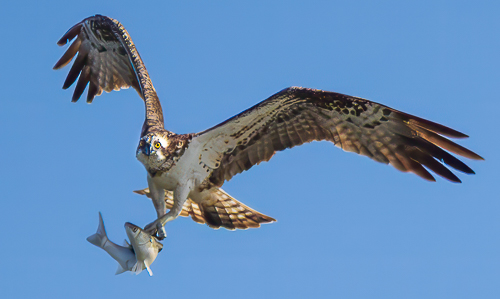
Osprey (unringed….) with prey

I’m a fairly regular visitor to the Teifi Marshes, at Cardigan, which has a selection of easily accessible hides allowing excellent views of interesting birds at close quarters. It must be one of the best places in the UK to photograph water rails, for example (see this post), and kingfisher. It is about fifty miles away from home, and I tend to visit the reserve if I am on my way down to Pembrokeshire for some reason. What I usually do is leave home the previous evening and sleep in the van, meaning that an early morning visit is easy. For a number of years I had a favourite park-up, about a mile away, in a very wide and deep farm gateway, where I had never seen any farming activity.

One such visit was late last winter. It was a cold and frosty night and I woke early to find the van enveloped in thick valley fog. I opened the rear doors to see a group of white ponies standing the other side of the gate in a white-out. It really was magical. I put the kettle on and began making my breakfast. Then I heard a vehicle arrive next to mine and its door opening. “Oi…. you can’t park there ….it’s private property!” came a voice (or words to that effect) . It was the farmer, coming to feed his animals. I hurriedly threw on some clothes and apologised profusely, switching off the kettle and moving into the driver’s seat. Turning the ignition key there was a click, and then silence. The battery had died overnight. I was so embarrassed! To his credit the farmer could see that I was harmless and was in an impossible situation. He easily carried his bales of hay the few extra yards from his trailer to the gate, and was away. I called the breakdown service and settled down to a long wait and a leisurely breakfast. I wouldn’t be visiting the Marshes that morning…….

Since then I’ve found another park-up not far away and have spent a few nights there. One such was last week, and I arrived at the reserve about 7 o’clock on Thursday morning; the tide was high, the river full and the hide overlooking the (tidal) creek seemed to be a good place to start. I spent some time there and saw a very good selection of species – kingfisher, water rail, greenshank, and curlew among others. The problem for the photographer is that both the Creek and Kingfisher hides face east; the light can be very difficult at both until at least mid-morning. Nevertheless I did manage some close-up images of a kingfisher from the latter; I also watched a water rail there fly to the island, and then swim back to the main reedbed a few minutes later! Returning to the Creek hide I photographed a small wader creeping around at the water’s edge. Although the photograph is nothing to write home about it was good enough to identify the bird as a green sandpiper.

It had been reported earlier in the week that three different ospreys had been seen fishing on the Teifi river alongside the marshes. They had been identified by the colour rings fitted to their legs as nestlings. One was unringed, another had been ringed in Germany and the third in Scotland. I returned to the Curlew hide on the river-bank in the hope that one would turn up. And turn up it did! Another photographer was droning away about all the birds he’d seen and where, when I noticed the gulls on the river had all flown and scattered. There was obviously “something about”. And sure enough, an osprey appeared over the river and, at its first attempt, proceeded to catch a fish right in front of the hide! During the minute it took the bird to gain enough height to fly away I was able to get a sequence of images of it with its prey. They weren’t all sharp but by judicious use of the denoise, selection and sharpening tools in Lightroom (and even a tweak in Topaz Photo AI) I was able to get several I am very pleased with.

I’m not sure if ironic is the correct word to use here but I chose the main photograph from the sequence because of the fish’s position. I doubt if the poor creature appreciated how this single split second (one four-thousandth to be exact) during its final moments of life in the osprey’s talons gave this meticulous photographer the most creative satisfaction.

NB. I’ve just cropped the main photo to enlarge the bird.

To read more Tales from Wild Wales as they are published please click the Follow button.

Immaculate birds, constant activity and plenty of noise!

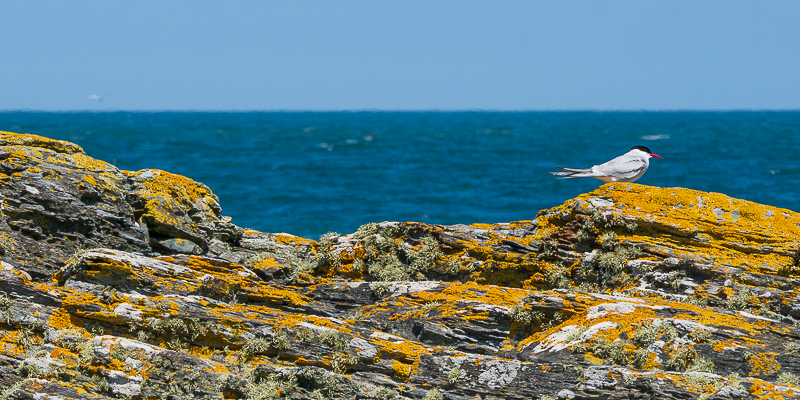
I might be a raptor nut but I love terns too. Wales is a bit of a “tern desert” and with one exception (little terns near Prestatyn) one must visit Anglesey to connect with them. Cemlyn Bay on the north coast is the Welsh tern H.Q. with its large sandwich tern colony, alongside smaller numbers of arctics and commons. On a good day one might see a roseate as well. I can confidently say that a visit to Cemlyn is one of the finest wildlife experiences in Wales. But your timing needs to be carefully judged.

The ideal time is just after the tern chicks have fledged because their parents then guide them to the shingle spit which divides the lagoon from the sea, away from the chaos of the nesting islands. But leave it too late and the whole damn lot of them will have left altogether! Last year I arrived on July 23rd to find that most had already gone, whereas in 2020, August 1st was just perfect.

This year I discovered that the North Wales Wildlife Trust helpfully posts updates on the progress of the colony on its website. It suggested that a visit sooner rather than later would be advisable. So I headed north late on July 12th. The following morning I was there bright and early for the full tern colony experience. Immaculate birds, constant activity, and plenty of noise! Despite nearly 50 years of birding experience I have never totally got to grips with the differences between arctic and common terns. Many birders refer to them as “comics” because they are so difficult to separate. However after this visit I think I’m getting there! Sandwich terns are comparatively easy, and I have so rarely come across roseates that identifying one would be a real adventure (but see this post…..).

Roseate tern (r.) with three sandwich terns. Note its long black bill and long-ish red legs..

As it happened I picked up my first roseate quite quickly. It was visible on and off on the near edge of the main nesting island during the morning, and around lunchtime there were two together. I was able to get a few (rather poor) photographs of them. One of the tern wardens arrived soon afterwards and I was able to point them out to him. How about that for confidence! But as he had been seeing them throughout the breeding season he wasn’t too excited. He told me that one pair had attempted to breed early on but had failed, while he was still hoping that another pair would soon appear from the denser vegetation on the island with a youngster.*

For some time prior to that I was in “spray and pray” (or point and hope) mode. In other words: point your camera at a bird in flight, press the shutter button and try to follow it. This seems to me to be rather a technical task more dependent on luck than anything else, and I find it rather unsatisfying.

Arctic tern …………probably………

What I found more challenging was to place the terns within the landscape to give them some kind of context. At low tide, during the middle of the day, many roosted on the beach or on rocky outcrops along the foreshore. One could thus place them within an unspoiled landscape, suggesting that all is well with the world, which is perfectly valid. Alternatively, shooting from a different angle, one could set them against the massive hulk of Wylfa nuclear power station , now disused, only a couple of miles away. The viewer can then make up their own mind about the state of the world.

With ……… or without ……..?

As I mentioned this was during the middle of the day when the sun was at its highest. This is never a good time to take photographs of anything in summer so one does one’s best to compensate for it at the processing stage. Some of the newer features in Lightroom are excellent for this – in particular the ease with which “objects” can be selected and processed individually without affecting the rest of the image. And “denoise” is excellent, although rather slow on my PC.

Another thing I noticed very clearly was how the apparent colour of the power station changed during the course of the day. Its colour scheme at breakfast time matches the colour of the lichen covered rocks on the foreshore very well, and it would be uncanny if this had not been part of its design. I included a photograph illustrating this in my book “Wales at Waters Edge”; I wonder if anyone noticed….? But by early afternoon the plant was naturally bathed in blue light and looked quite different. To put it more technically, the colour of sunlight is towards the blue end of the colour spectrum (“cooler”) during the middle of the day, while it is “warmer” earlier and later. This is well known among photographers but I have never known it being demonstrated so clearly as it was that day.

Arriving as early as July 13th was, in the event, quite a close shave. A note on Facebook from the tern wardens on the 18th said that most of the terns (95% of them) had already left the area. I wish them good luck on their travels and hope they make it back to Cemlyn next year.

*N.B. : The second pair also failed …..

To read more Tales from Wild Wales as they are published, please click the Follow button.

My website : www.wild-wales.com

Pipsqueaks.

Bardsey Island (Ynys Enlli in Welsh) is situated off the tip of the Lleyn Peninsula (Penllyn), separated from the Welsh mainland (Y Tir Fawr) by only a short sea crossing, but it could be many miles away. With its remote location, the island tends to attract rare migrants; it also has a manx shearwater colony and a bird observatory. Together with Jane (my partner) and three good friends, I spent last week there. It was actually my seventh stay on the island; each week has been quite different and I well my remember my first. I picked up an infection, probably from the spring water supplied to the houses, which laid me low for a few days. Alone in my accommodation, I felt very ill indeed and believed I could have died there without anyone knowing! Fortunately in recent years a water purification system has been installed.

After another visit I was chatting to a Welsh-speaking neighbour and told her I had just spent a week on Enlli. She looked at me very strangely, and then explained that Enlli is the name of the psychiatric ward at the local hospital. I’ve always used the name Bardsey since then…….

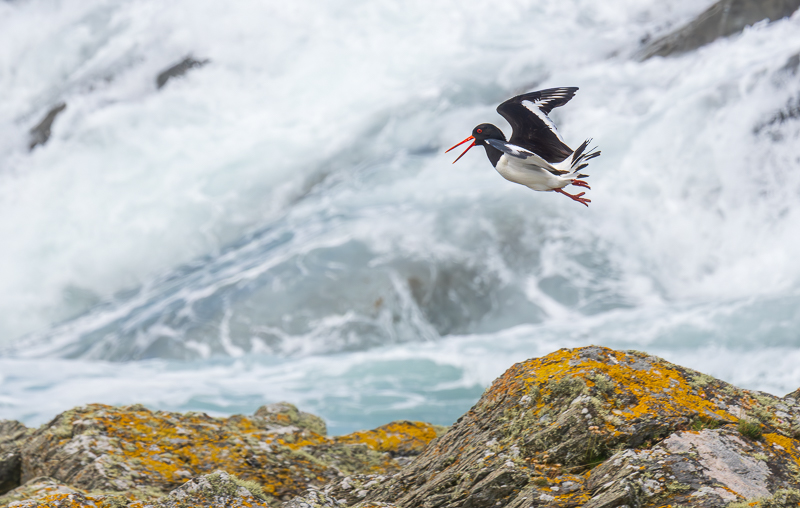
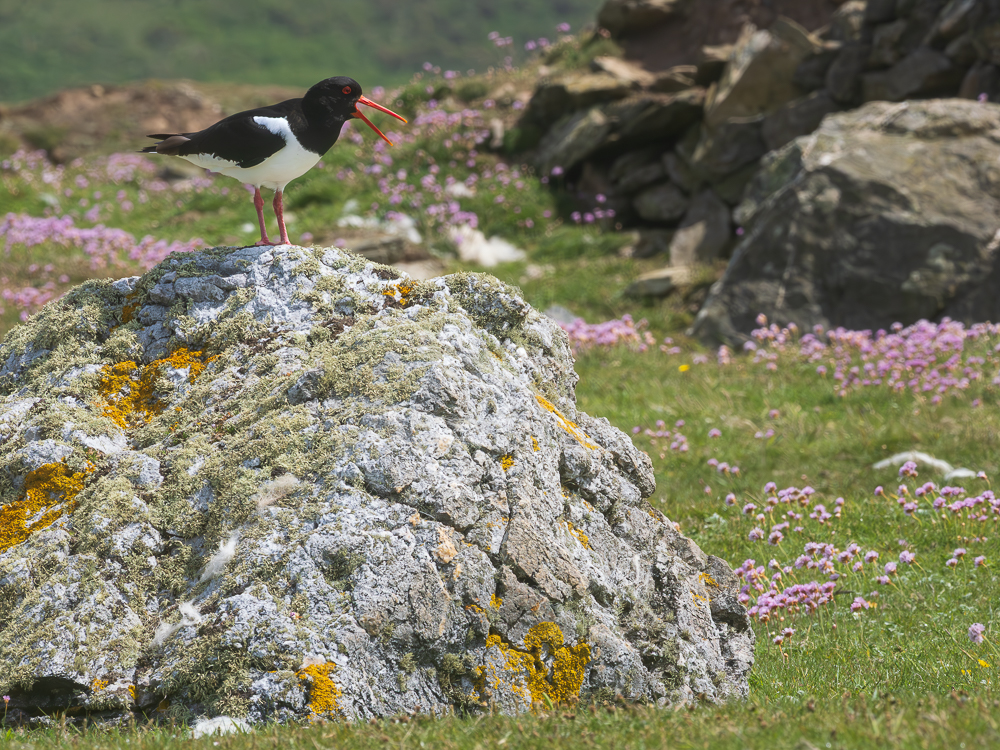
I don’t usually resort to cliches such as “bird of the week” but just this once I’m going to. It could have been the (scarlet) rosefinch which my friend Jonathan first identified, and whose song could be clearly heard from our kitchen table for a couple of days. The island has a large population of my favourite bird, the chough, and their calls could frequently be heard wherever you were. But the chough is a Schedule One (specially protected) species during the breeding season so I tended to avoid them. So I’m going to plump for something much more familiar – the oystercatcher. As you walked around the island you would pass from one oystercatcher territory to the next, and you would be subject to a new tirade of raucous high-pitched screeching. One bird was particularly aggressive, repeatedly flying noisily towards me at eye-level and only veering away at the last second. I believe on one occasion its wing tip brushed my arm as it flew past.

Their behaviour and alarm-calling is designed to alert their youngsters of the presence of a potential predator (in this case me) and it is obviously very successful. No matter how hard I tried I never managed to locate a single chick. They leave the nest as soon as they hatch and must hide amongst the pebbles and boulders amongst which they are feeding. But I wondered how intelligent the adults actually are. I found that while I was standing upright I was fair game for all the aggression that they could muster. But if I made a half-hearted attempt to “hide” or lower my profile their behaviour became calmer and their calling quieter. It was during these moments that I was able to photograph them in a more relaxed fashion. I ended up with hundreds of oystercatcher images, and have spent many hours deleting and processing them since I returned home.

It was during these lulls in activity that also I coined a new name for the species – “pipsqueaks”. After all, they don’t actually eat oysters ………….

Enjoy…….

Please click the Follow button if you would like to receive more Tales from Wild Wales as they are published.

My website : www.wild-wales.com

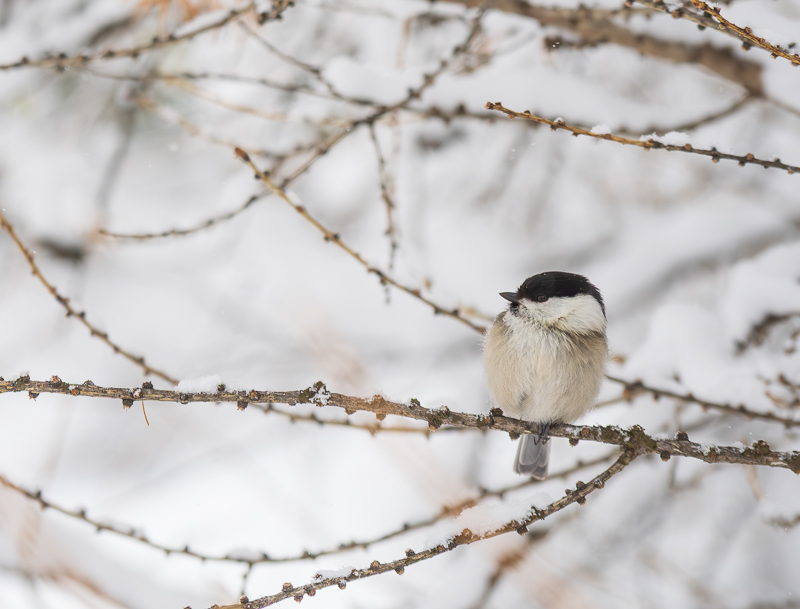
Do you know your willow tit from your marsh tit?

Willow tit……..

There can be no more difficult bird i-d challenge in the UK than distinguishing willow tit from marsh tit. According to ‘Birds in Wales’ willow tit was not even proven to occur in the UK until 1897, and for several decades following that “…its distinct identification from marsh tit was not universally accepted”. The Collins Bird Guide suggests various subtle differences; for example marsh tit has a glossy black cap while the willow’s is matt. The white cheek is more extensive on the willow than the marsh, and one (the willow tit) has a pale panel on its wing while the marsh doesn’t. The black bib is “usually” larger in the willow than the marsh. However a video from the British Trust for Ornithology now suggests that it is not safe to distinguish one from the other on any of these characteristics. The only reliable difference is a pale grey spot at the base of the upper mandible (the beak) which the marsh has but the willow doesn’t. This conclusion would have been reached following the close examination in the hand of large numbers of individuals by bird ringers, so is likely to be correct. But no wonder there was such a long period of doubt over whether both species existed in the UK.

Along with the willow tits came crested tits………

It is widely agreed that the safest way of telling one from the other is by voice. I’m not confident that I’ve ever definitively seen or heard either species, but during the winter I heard a new (to me) bird song on a regular walk in some woodland below the house. I believed it was either a willow tit or a marsh tit. It sounded very like a wood warbler, which, being a summer visitor, could not have been present. My Collins Bird Guide specifically mentions a “series of pensive, melancholy, wood warbler-like notes”, under willow tit. I hadn’t actually seen the bird but this was about as good an i-d feature as I was likely to get. I announced my record on the Ceredigion Bird Blog, with the caveat that Ian Morris – the county’s resident willow tit expert – might have an opinion on it. A few days later I had an interesting email from another Ceredigion birder who had had a similar experience to mine. Over a period of some weeks he had re-visited his location and played back a recording of the willow tit song. On every occasion he had attracted a pair of nuthatches! It’s enough to make you tear your hair out!

A few weeks later Ian Morris visited and we walked down to the location where I had heard my mystery bird. He played back the song but there was no response. It was a long shot really but he didn’t believe the habitat was right for willow tit anyway…..much more suitable for marsh …………

…………and a few nuthatches………..

One reason I recount this cautionary tale is that during March I spent a couple of days quite high in the Swiss Alps. It still being deep mid-winter some lovely conifer woodland there was blanketed with fresh snow and almost completely devoid of of birdlife. The main exceptions were flocks of tits roaming around waiting for hand-outs from folks like me. Among them were “poecile montanus” (according to the interpretation boards) which were so bold as to perch on people’s hands to grab a seed or two. This, of course, is the willow tit, which, according to the bird books, rarely even visits bird tables in winter ……..

To read more Tales from Wild Wales as they are published please click the Follow button.

A walk along the beach.

Just after the New Year we went for a low tide walk along the beach at Ynyslas. It was stunning …… blue skies, no wind….everything you could want from a winter’s day. We walked from the golf club car park, round the end of the dunes to the visitor centre (soon to be closed); then after a cup of coffee back along the board walk to return to the car park along the beach. By this time lengths of the peat underlying the sand had been exposed. As I walked along, Jane drew my attention to a small flock (21 birds) of sanderling which had alighted on the peat just behind me. I hesitated for a while before extracting my camera from my backpack. I expected them to fly off immediately, but they stayed put, probing in the peat for food, and running backwards and forwards as the waves washed in and out. I had two minutes with them before they flew off as quickly and mysteriously as they had arrived.

Enjoy the photographs!

To read more Tales from Wild Wales as they are published, please click on the Follow button

I think I’ve cracked it……

I ended my post of January 20th this year by saying “One of these days I’ll get a decent picture of a water rail.“. On October 10th I mentioned water rails again and said “My record with them is pretty sketchy. They are nimble and fast moving and tend to appear only close to dusk or dawn.

On another visit to the Teifi Marshes at Cardigan early one morning last week all that changed. No sooner had I entered the mallard hide and sat down, than one of the little blighters started squealing from the tiny island just in front of the hide. Soon the bird appeared, quickly followed by another. It seemed as if there was some kind of dispute going on between them. This wasn’t the shy and retiring species of the text books. About nine thirty one emerged from the island’s reeds , walked towards the hide, immersed itself for a short swim, and disappeared again. A few minutes later it re-emerged and swam most of the way towards the reeds to the left-hand side, only to decide that it preferred being on the island after all, and returning. This was brazen!

I took several hundred images altogether, and it has to be said that entire sequences were either out of focus or just generally mushy. I’ve never understood why this happens. But there were enough sharp and well-lit images for me to be able to say ” When it comes to water rails, I think I’ve cracked it.”

Given that the species is renowned for being more often heard than seen, let alone photographed, I can’t imagine there is anywhere better for getting to grips with them than the Teifi Marshes.

To read more Tales from Wild Wales as they are published, please click the Follow button.

My website : http://www.wild-wales.com

Another visit to the Teifi Marshes.

Otters on the mallard pool

It almost always worth visiting the Teifi Marshes, a Wildlife Trust reserve near Cardigan (See this post as well). The big attraction for me is the reedbed which has three hides situated within it. Two are on the edge of small pools and the third overlooks a narrow creek draining into the River Teifi. Because the pools are small any wildlife using them tends to be pretty close, and all three hides are popular with wildlife photographers. It is an exceptionally good location to see and photograph kingfishers and even water rails – although my record with the latter is pretty sketchy. They are nimble and fast moving and tend to appear only close to dusk or dawn.

Last Saturday I arrived just after dawn and made my way along the old railway line (now a multi-use path) to the hides. Two otters visited the Kingfisher pool but all that could be seen of them was the top of one head and two trails of bubbles. Entering the Mallard hide I sneezed and a water rail immediately responded with its squealing call. It was on the water’s edge just below the hide but had disappeared by the time I got my gear set up. The same pool was full of activity later on with six squabbling moorhens present. There were also eight little grebes and at one point they all gathered in a semi-circle around the moorhens to watch the battle. Real school playground stuff!

Suddenly two otters appeared from the reeds. I tried to keep calm. My camera was set up correctly to photograph them as they swam slowly across the pool. I had the hide to myself and scrambled from one side to the other in an attempt to avoid having an out-of-focus kingfisher perch in the foreground. (In the end I was able to crop it out) After just one minute the otters disappeared back into the reeds as quickly and as mysteriously as they had arrived.

Unfortunately I didn’t have time to alter the aperture setting so while the otters are sharp the heron is just out of focus. Being a perfectionist this matters to me and I need some sharpening software to improve the image. Lightroom does almost everything I need my software to do but it does have its limitations. Topaz Sharpen AI does a very good job but I only have a trial version and the output has a watermark across it. I can’t get the same results from Photo AI, its successor. Shame!

If you visit the Teifi Marshes, here’s a few pointers. Coming from the south by car head for Cilgerran and take the main drive to the car park and visitor centre (parking fee payable). From the north, it is easier to park in the industrial estate south of the river, between the two bridges, and walk to the hides along the old railway track. For seeing and photographing wildlife dawn is best; by mid-morning the reserve will be the domain of dog walkers, child minders and families with limited interest in natural history. You have been warned!

To read more Tales from Wild Wales as they are published, please click the Follow button

My website : http://www.wild-wales.com

Edit: I have since found that Topaz PhotoAI DOES give a good sharp result when used on this image and I am considering purchasing it.

Serendipity

I’ve just got back from a trip around Scotland with Jane, my partner. We spent a week on Mull and then went cross country to Perthshire where we visited some great friends. Photography-wise there’s no doubt that the highlight was a boat trip from Fionnphort on Mull to the islands of Lunga and Staffa. Here’s how it happened.

I have an unfortunate tendency to arrive early or late for appointments by either an hour, a day, or even a month. Yes, the latter has happened! We were staying in the campervan most of the time but I had booked one night’s accomodation in a “pod” on Iona, just a short ferry ride from Fionnphort. Not unexpectedly I got my days mixed up and found that we had a free day on Mull before the Pod was available. Our neighbour on the campsite had booked a boat trip to Staffa and Lunga on our free day so on the spur of the moment I looked online to search for spare places. To my surprise there were, and I booked them right away. A few minutes later I checked the booking and noticed that it was for the wrong day – the day we were booked in on Iona. Cue mega-panic! Late night messages to the boat company followed, and they got back straight away with the news that they would re-arrange it for the correct day. Phew……

The forecast was great for the trip with unbroken sunshine and light winds. We cruised northwards among the Inner Hebrides in perfect conditions for an hour or so before arriving on Lunga. This island was an unknown quantity to me but a few minutes after landing puffins could easily be seen amongst their burrows on its grassy edge. I didn’t realise what was to come a little higher and further along the coast.

The path wound up through broken rock and grassy slopes dotted with bluebells and other spring flowers. Puffins seemed to be everywhere and were more approachable than they are on the Pembrokeshire islands. Some were quite oblivious to any human presence. Two visitors ahead of me seemed to be photographing a low rock-face but there was actually a pair of puffins pottering in and out of their nest in a crevice just behind it. I could easily have reached out and touched them. They are absolutely enchanting birds and I make no apologies for presenting a photograph of them in all their cuteness. Perhaps we love them so much because they remind us of ourselves? (See the main pic)

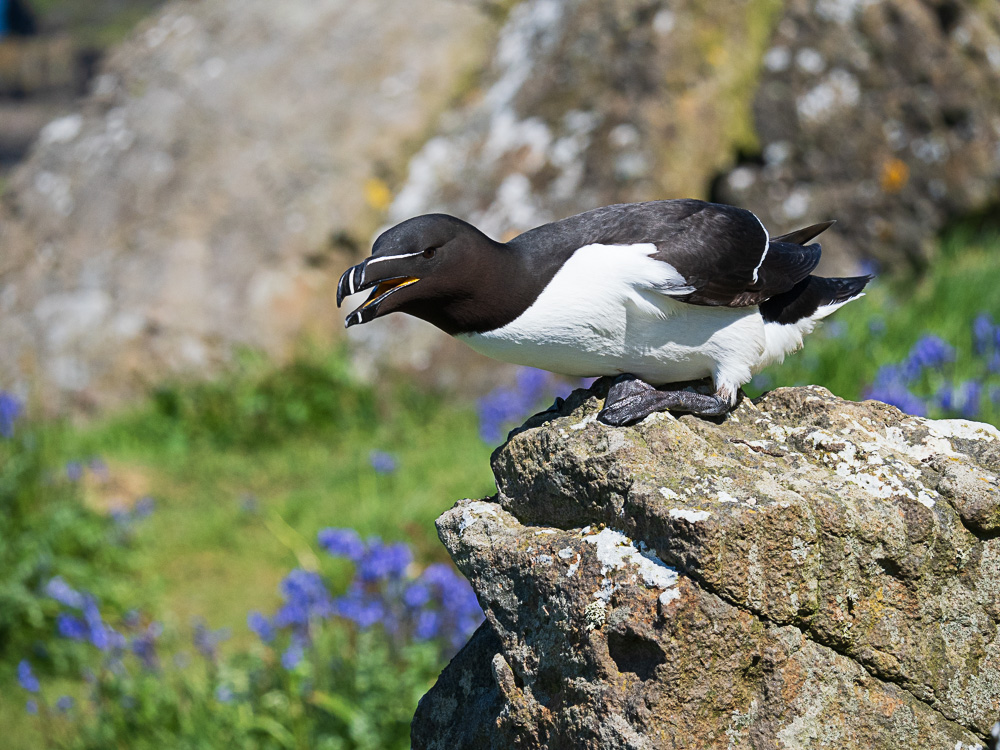
Reluctantly dragging myself away I soon came to the end of the main path close to an auk colony. While the huge majority of the birds were on the far side of a precipice that didn’t stop individuals landing this side of it close to me and the other human visitors. I’ve never been in close proximity to a shag before but one landed nearby and stayed, allowing me to photograph it at length. One young woman was sitting on a rock outcrop and a razorbill landed next to her as if she wasn’t there. It was astonishing! I reflected on how easy it would have been for the early sailors to plunder these seabird islands for food as they explored the oceans. And no wonder the great auk became extinct – it didn’t even have the advantage of flight.

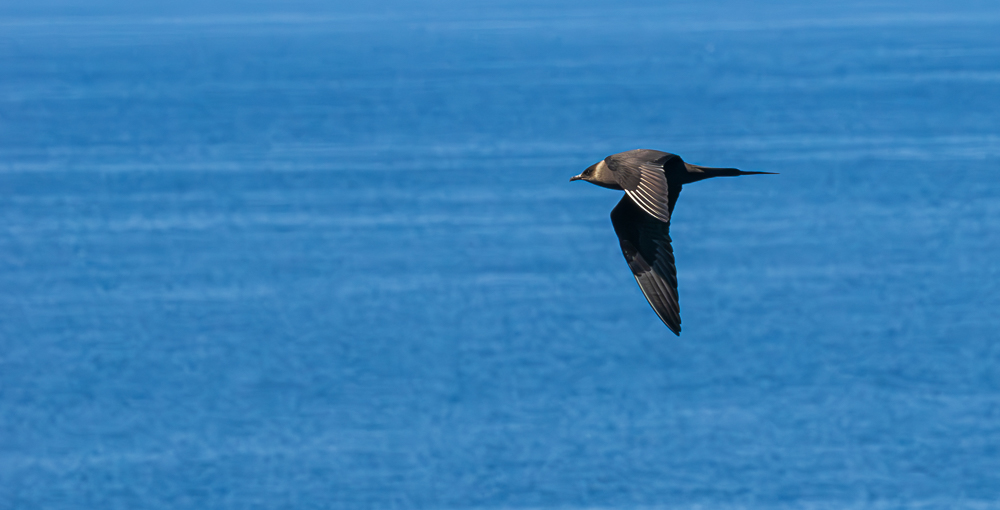
Most of these bird portraits were taken with my 24 – 100 mm zoom lens, not the long zoom that is normally obligatory for bird photography. I did, however, swap lenses to capture one of two arctic skuas which were patrolling around just offshore in an attempt to make unwary seabirds disgorge their food.

Arctic skua – much reduced in numbers following the avian flu outbreak.
Basalt columns on Staffa

We only had two hours on Lunga and before long it was time to return to the boat. I was exhilarated; it had been one of the best mornings of my life. By contrast, the island of Staffa, inspiration for Mendelsohn’s piece “Fingal’s Cave” and our second port of call, was rather a disappointment. The geology was extraordinary but time was very limited and visiting the cave was like being on a production line. Boat after boat was disgorging its passengers for half an hour and then leaving.

It was only through the series of mistakes I made that we actually got to Lunga at all. If I had had time to do some research I would probably have taken the shorter and cheaper trip to Staffa only. And if it hadn’t been for our neighbour at the campsite we might never been able to appreciate the wonders of this astonishing seabird colony. Serendipity indeed!

To read more Tales from Wild Wales as they are published, please click the Follow button.

My website – http://www.wild-wales.com

Wild goose chase numbers 1 and 2…….

The coming of some sunnier weather last week had me chomping at the bit to do some photography. I have never seen an eagle in Wales but a shower of records and photographs on Facebook suggested that the first-winter white-tailed eagle was still in the Llanuwchlyn area (near Bala) on the Sunday. I contacted my friend Jonathan and we decided to meet up there on Monday morning. A car-load of birders confirmed that I was indeed in the correct area – a tributary of the Lliw valley about three miles north-west of the village. It was a cold but sunny day with a smattering of snow on the ground. I had a an “interesting” time turning the van round on a steep, narrow and icy single track lane with few passing places but having done that it was time to go for a walk. By early afternoon it became apparent that the eagle hunt was a lost cause. There was no sign of it and I returned home disappointed. A post on Facebook during the evening showed that it had been seen at 9 a.m. that day about four miles to the east.

Chores kept me at home for a couple of days but on Thursday what did I do? Set off on another wild goose chase, of course! Four waxwings had been reported on the Teifi Marshes near Cardigan. I was determined to travel down by public transport this time but by 8.30 there had been no sign of the 8.15 bus so it was back to the van. It didn’t take me long to find the waxwings and I watched them on and off until mid-afternoon. They remained within a short section of overgrown hedgerow bordering the old railway track, which is now a foot- and cycle-path. A knowledgeable local birder said it was now their eleventh day on the reserve.

My only previous sighting of waxwings had been at Machynlleth in 2012. A large flock was frantically feeding on ornamental rowan berries outside the library on the main street. Perhaps on that occasion they had recently arrived in the UK after an energy-sapping journey across the North Sea. In contrast the Teifi Marshes birds were very relaxed. Now and again one would half-heartedly pull a desiccated hawthorn berry off a twig but it didn’t seem too concerned if it fell to the ground. In an unusually informative description the Collins Bird Guide states :

“In winter can eat frostbitten and semi-fermented berries, which may intoxicate the bird and render it temporarily incapable of flight”

While they were capable of preening and spent some time doing so, perhaps they were otherwise too sloshed to move! They did, however, fly off as a group just before I left for home. It also was evident that they had no fear of humans or dogs, either, so perhaps they had no previous contact with people in their home in the Scandinavian (or Russian) taiga.

I was pleasantly surprised at the quality of the pictures I managed to come back with. The light was variable, from dark and gloomy to bright sunshine. Fortunately there were some periods of bright sunlight obscured by thin cloud. These conditions produced the best results as no harsh shadows were created and reasonably short shutter speeds could be used..

I also dipped in and out of several hides and had particularly good views of a snipe, while one or more water rails caused momentary excitement. But boy…. do they move fast! One of these days I’ll get a good picture of a water rail.

To read more Tales from Wild Wales as they are published, please click on the Follow button.