In the footsteps of Fay Godwin.

For many years I have been inspired by the work of the photographer Fay Godwin, who died in 2005 (see this post in particular). This is not the place to fully discuss her life or work. But to summarise the trajectory of her career she was a self-taught photographer who progressed from portraits of authors through traditional landscapes to documentary work out in the landscape, in which environmental issues were prominent. She worked in black-and-white throughout until her last years when she made abstract colour still lives in the studio.

Perhaps “inspired” is the wrong word. Without the advantages she had had (her husband worked in publishing……*) I feel that I have been ploughing the same furrow as she did. The sequence of photographs in my first book – “Wales – The Lie of the Land” (published in 1996) – moved from the “unspoilt” uplands through the industrialised lowlands to the “unspoilt” coastline. Hell, it even included a photograph of Snowdon with someone’s clothes line (complete with washing) in the foreground! No, over the years I suppose I have often felt comforted to know that my vision was shared with her. But I never copied her work.

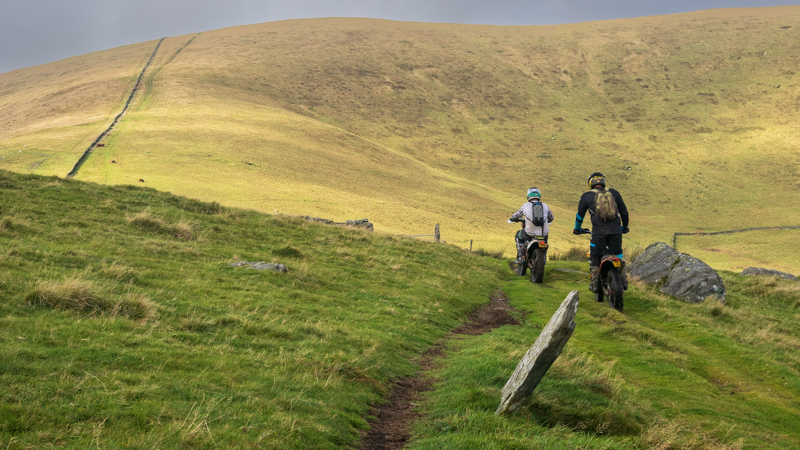
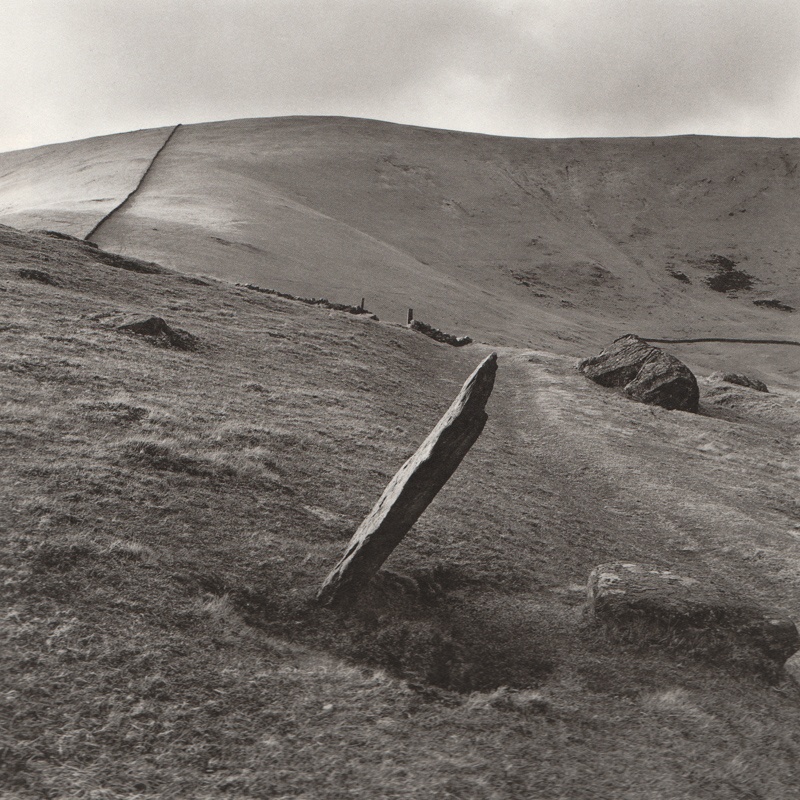
Until now. I was intrigued by one of her most iconic images, “Marker stone, Harlech to London road”, which first appeared in the book The Drovers’ Roads of Wales (1977) by Godwin and the author Shirley Toulson. It is brilliantly seen and geometrically composed, perhaps more exactly than most of her images. The wall on the hillside in the background is exactly parallel to the angle of the stone and the two are linked by another wall almost at ninety degrees to both. But the exact location was not mentioned and I wondered if Godwin had taken the photograph but couldn’t remember exactly where it had been. I decided I would track the location down and replicate the image.

Godwin (1976)
Moore (2024)

The route of the old Harlech to London drovers’ road is mapped in Toulson/Godwin and I wrongly assumed that the stone would be marked on the current 1:25000 Ordnance Survey map. At the Royal Commission for Ancient and Historic Monuments in Aberystwyth I was told that marker stones were commonplace, not necessarily ancient, and as a rule not catalogued. I studied the ancient road’s route on an old OS map online in their library. Marker stones were plotted at regular intervals and by carefully relating one of them to a gate in a wall (visible in the Godwin image) and the wall up the hillside in the background I came up with the prime suspect.

It was an exciting walk up from the roadhead towards the uplands. The closer I got the more confident I became that my guess was correct. The drovers’ road is what would now be described as a “green lane” and was suffering the same fate as many others – offroad bikers churning up the grassy surface into a rutted mess. Then I began to lose faith; none of the other marker stones were visible, and the far “vertical” wall seemed to be pivoting around to the wrong angle. But I needn’t have worried.

I was just getting acclimatised to the place when I heard the (unfortunately) familiar sound of scramble bikes heading towards me. My heart sank but I quickly realised it would be an opportunity to add value to the image I was visualising. I took a series as they headed past the stone towards the gap in the wall. I then got down to the task in hand – finding the exact location where Godwin had stood, sat or kneeled to make her image.

It proved to be impossible. The stone was smaller than it appeared from her photograph and it looked as if it might have sunk or toppled slightly over the last 48 years. The left/right wall was invisible unless I stood up, in which case the tip of the stone was well below its position in the original. I also came to the conclusion that since 1976 grazing pressure on the grassland had become less intense, allowing the turf to spring up and hide the wall and most of the gateway.

An obvious new route has been created to the left of the stone by offroad bikers. On the far hillside, parallel to the wall, a network of illegal scramble bike tracks can be seen; in fact the two offroaders that passed me carried on and added to them – up to the ridge……turn around……slither down again….. The final difference between the two images being a substantial flat rock lying to the right of the marker stone which is missing in the 2024 images.

So would Fay Godwin have approved of my pilgrimage? Quite possibly not. Would she have approved of the new image complete with bikers? I’d like to think so, particularly later in her life.

*Chief editor at Penguin Books and later Managing Director of Weidenfield and Nicholson. It all helps……

To read more Tales from Wild Wales as they are published, please click the Follow button.

My website –http://www.wild-wales.com

The Isle of Dogs.

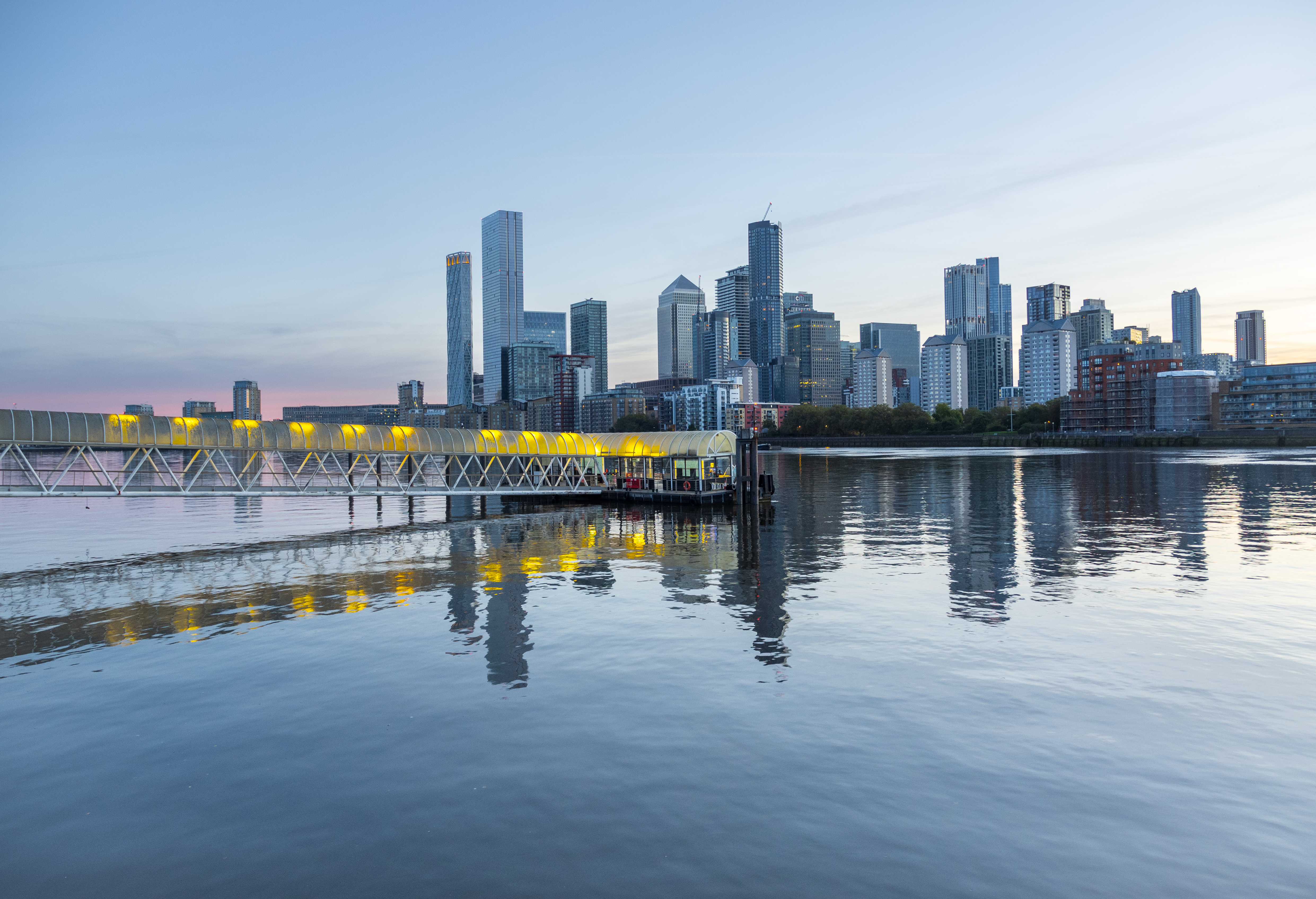
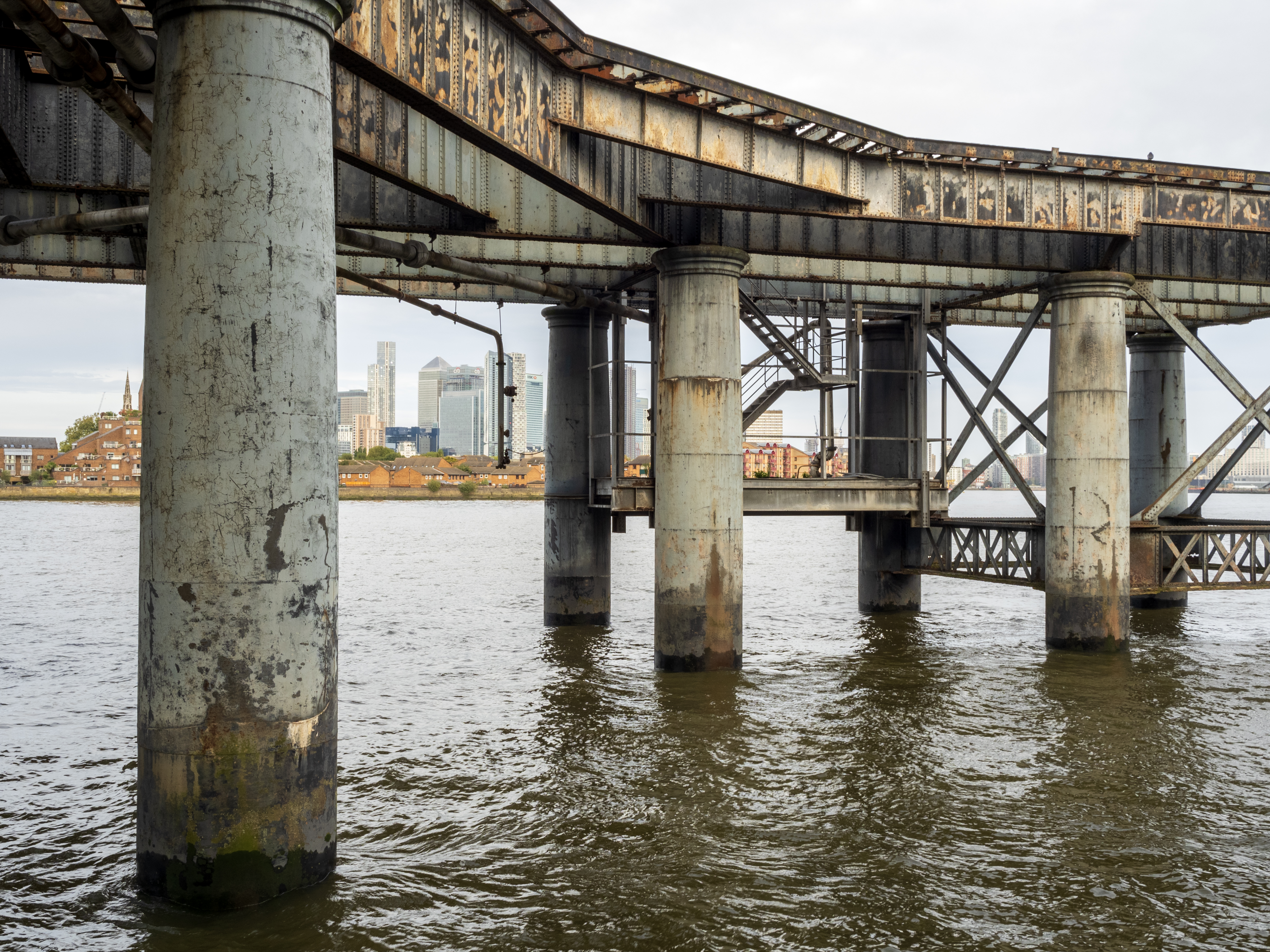
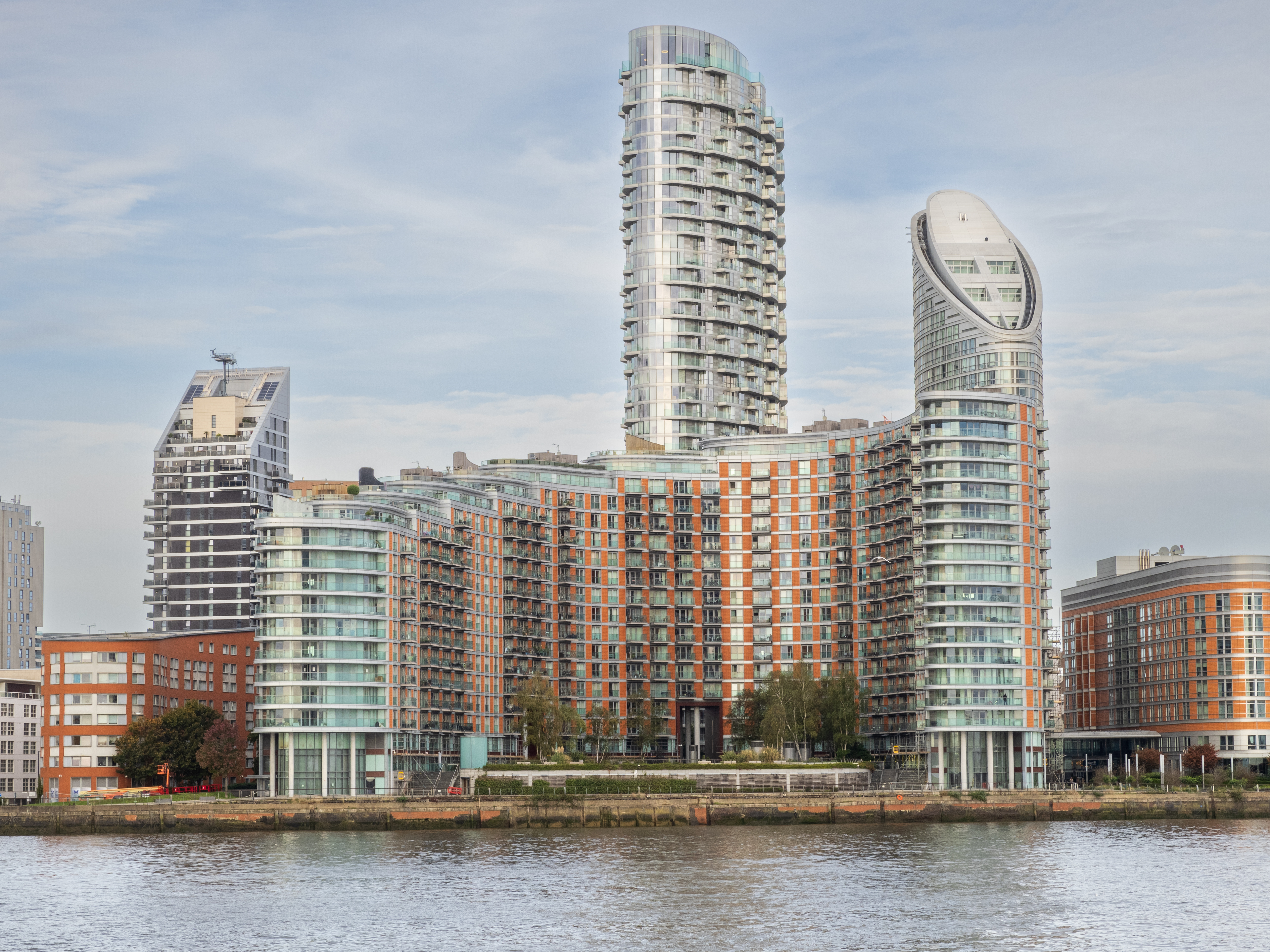
Last weekend Jane and I had a couple of days in London. From our room near Greenwich it was just a couple of minutes walk to the Thames Path which more or less follows the riverbank. All very ordinary really. But across the water rose the massive tower blocks of Canary Wharf on the Isle of Dogs. It was about as far removed from Wild Wales as you can imagine. For a country bumpkin like myself these monsters reaching for the sky were impossible to ignore. The architecture of Canary Wharf is extraordinary from a distance. However I also spent a couple of hours amongst the tower blocks and I don’t think I have ever experienced a landscape so de-humanising. No soul at all. And no dogs.

I just had my little Olympus OM5 with me and a standard zoom, so photography-wise the trip was somewhat limited. Nevertheless I’m pleased with what I achieved, so enjoy the pictures!

Emerging from Greenwich village onto the riverbank I was knocked out by this panorama
I love the cool blue tones of this pre-sunrise image, which contrast so strongly with the yellow lights on the pier footway.
Virtually every vestige of the industrial Thames around here has been removed, so this jetty is a rare reminder of the not-too-distant past.

Not what you might think. This is one of a series of artworks on the Greenwich peninsula. The artist Richard Wilson bought the sand-dredger “Arco Trent” and installed a slice of it on a sandbank in the Thames.

Extraordinary architecture……..

To read more Tales from Wild Wales as they are published, please click the Follow button.

My website: www.wild-wales.com

Another visit to the Teifi Marshes.

Otters on the mallard pool

It almost always worth visiting the Teifi Marshes, a Wildlife Trust reserve near Cardigan (See this post as well). The big attraction for me is the reedbed which has three hides situated within it. Two are on the edge of small pools and the third overlooks a narrow creek draining into the River Teifi. Because the pools are small any wildlife using them tends to be pretty close, and all three hides are popular with wildlife photographers. It is an exceptionally good location to see and photograph kingfishers and even water rails – although my record with the latter is pretty sketchy. They are nimble and fast moving and tend to appear only close to dusk or dawn.

Last Saturday I arrived just after dawn and made my way along the old railway line (now a multi-use path) to the hides. Two otters visited the Kingfisher pool but all that could be seen of them was the top of one head and two trails of bubbles. Entering the Mallard hide I sneezed and a water rail immediately responded with its squealing call. It was on the water’s edge just below the hide but had disappeared by the time I got my gear set up. The same pool was full of activity later on with six squabbling moorhens present. There were also eight little grebes and at one point they all gathered in a semi-circle around the moorhens to watch the battle. Real school playground stuff!

Suddenly two otters appeared from the reeds. I tried to keep calm. My camera was set up correctly to photograph them as they swam slowly across the pool. I had the hide to myself and scrambled from one side to the other in an attempt to avoid having an out-of-focus kingfisher perch in the foreground. (In the end I was able to crop it out) After just one minute the otters disappeared back into the reeds as quickly and as mysteriously as they had arrived.

Unfortunately I didn’t have time to alter the aperture setting so while the otters are sharp the heron is just out of focus. Being a perfectionist this matters to me and I need some sharpening software to improve the image. Lightroom does almost everything I need my software to do but it does have its limitations. Topaz Sharpen AI does a very good job but I only have a trial version and the output has a watermark across it. I can’t get the same results from Photo AI, its successor. Shame!

If you visit the Teifi Marshes, here’s a few pointers. Coming from the south by car head for Cilgerran and take the main drive to the car park and visitor centre (parking fee payable). From the north, it is easier to park in the industrial estate south of the river, between the two bridges, and walk to the hides along the old railway track. For seeing and photographing wildlife dawn is best; by mid-morning the reserve will be the domain of dog walkers, child minders and families with limited interest in natural history. You have been warned!

To read more Tales from Wild Wales as they are published, please click the Follow button

My website : http://www.wild-wales.com

Edit: I have since found that Topaz PhotoAI DOES give a good sharp result when used on this image and I am considering purchasing it.

The Llanberis lone tree

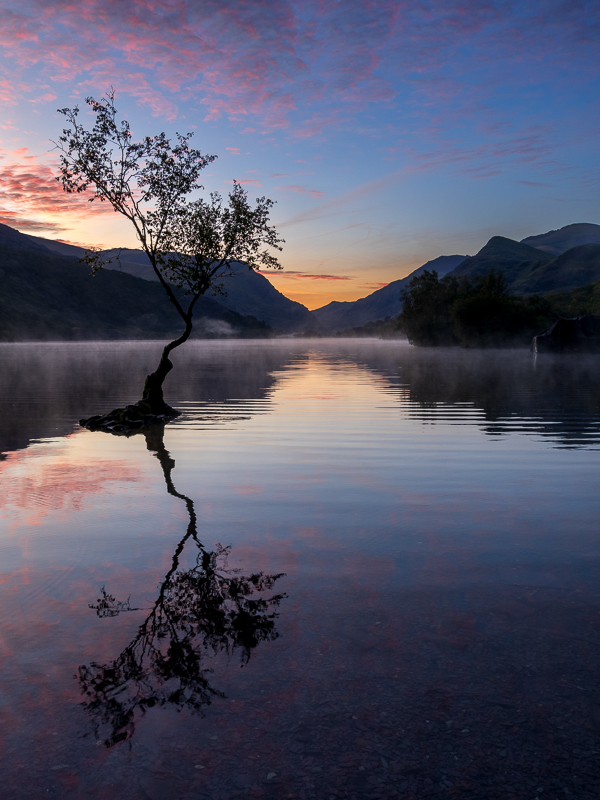
I was vaguely aware that it existed, and I think I may have visited the area many moons ago. But I’d never taken any photographs of it. I had no idea that there were countless zillions of photos on the internet of the Llanberis lonely tree. It even has its own Facebook page (well sort of…..). So last week I decided it was time I put this situation to rights.

Sunday it had rained all day but the forecast was for a clearance overnight with sunshine throughout the following day. It sounded perfect! I had a pretty good idea where the tree was so the plan was to arrive about 10pm, shortly afterwards falling into a deep and restful sleep in my van, and waking gently just before dawn. What I hadn’t allowed for was the fact that a Netflix movie was being filmed there, and barriers were up everywhere. The nearby car parking had also been “improved” with a long list of restrictions, including “no overnight parking”. This is now typical at honeypot locations throughout Wales and probably elsewhere, but I wondered how many parking attendants would be active between 10 pm and 6am. I had a good chat with a very helpful security guard from the location company who reassured me that my presence nearby would be tolerated.

The next morning I did wake fully rested and brewed myself a quick paned*. I found the tree quickly enough although to get there I had to sidestep one security barrier. Everything was set up perfectly. It was flat calm, the sun was just about to rise and there was enough cloud in the sky to make it interesting. About 6.45 the clouds reddened up. Oh joy! I started with a portrait format image and then began a series of landscapes. The reflections were perfect. And then the first security guard noticed me. She came over and asked me how I had got there. Perhaps I had arrived by helicopter? “Well,” I told her, “I walked.” It had been dark and I couldn’t really remember in any detail. I eventually explained that I had walked round a security barrier. It all ended amicably enough, with me reassuring her that I would soon be finished and would then leave. Two more security guards arrived in the next few minutes. All three seemed to surprised to see me there. One was rather officious, telling me he would have to contact his superiors. We both knew it was all bluff. But shortly after 7 am, it was “mission accomplished”. It had given me extra satisfaction to know that I had outwitted “security”, but if they really wanted to exclude visitors they would really have to try harder! I packed up and left.

When I arrived home a few days later I was very pleased with the results, especially the earliest images with the pink clouds. Very soon this gorgeous colouration had disappeared and the later images look better in monochrome. Photography can often be about moments and this moment had lasted about fifteen minutes.

This was the first stop on a whistle stop tour of north Wales and I may write more later.

* Welsh for “Cuppa”……..

My website www.wild-wales.com

To read more Tales from Wild Wales as they are published, please click the Follow button.

Come on lads….it’s time we were off.

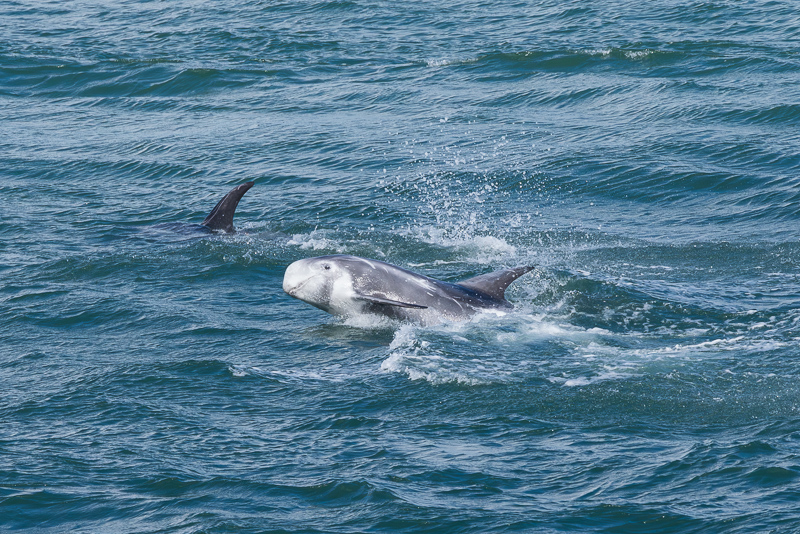
Risso’s dolphins, Point Lynas

About thirty years ago I was part of a team of volunteers who spent a week on Ynys Enlli (Bardsey Island) looking out for Risso’s dolphins. We stayed at the lighthouse (reserved for researchers) and kept a dawn-to dusk watch for these lively cetaceans using a telescope. There were a number of sightings but all were pretty distant. One day I was on observation duty when I spotted what appeared to be a cetacean “blow” (exhalation) in the far distance. It was angled at 45 degrees to the vertical and may have been a sperm whale. I called the others out but it was just a one-off sighting.

Since then I have drifted away from marine conservation but was aware that risso’s dolphins could be seen from certain locations along the Welsh coast. As well as Enlli there were sightings from Strumble Head in Pembrokeshire, and Point Lynas on the north coast of Anglesey. In fact the latter has become a regular and almost guaranteed location at the right time of year. Many excellent photographs of risso’s have appeared on the internet in the last few years. My first visit was on September 28th 2022, when animals were certainly present and very active, but were too distant to allow successful photography. I decided to try again one day last week.

I stayed overnight with my friend Jonathan in Nantlle, about an hour’s drive on a good day from Point Lynas. We aimed to be there by high tide at 12.20 pm, but for various reasons set off far too late. Further delayed by road works and the remnants of summer holiday traffic it was actually 12.45 before we arrived at the lighthouse. A small group of Sea Watch Foundation volunteers with binoculars and clipboards were just leaving. This was not a good sign! I tentatively enquired if they had seen any dolphins and one girl told me they were “just around the corner”. A woman sitting on the rocks below the lighthouse said she had been watching them for an hour and a half. I took a quick snap as one individual disappeared beneath the waves but another small group weren’t far away. There was a sudden burst of activity from one individual in this group with vigorous tail slaps and much sea-spray, and they disappeared. It all went very quiet. I said to Jonathan “I hope it wasn’t saying to the others “Come on lads, it’s time we were off……”” But it was.

There was a fair bit of porpoise activity in the rough water off the point, and at least one more distant risso’s and a probable bottlenose dolphin or two on the walk back to the car, but that was it. What a lost opportunity!

All was not completely lost, however. I managed one sharp and pleasing image from a couple of bursts before the group disappeared (see above). It made me determined to go back to Point Lynas before the month of September was over.

My website – http://www.wild-wales.com

To read more Tales from Wild Wales as they are published, please click on the Follow button

Once you’ve seen it…….

……… it’s difficult not see it.

I don’t know how many times I had walked to St Davids Head along the undulating coastal path without seeing Coetan Arthur, the neolithic burial chamber. I had walked around it, possibly crawled under it and definitely photographed it in close up but never noticed how clearly it was visible from some distance away. Then one day I must have seen it and now I cannot walk along that section of the path without seeing it. It draws the eye. I don’t believe this a coincidence either; the coastal path presumably follows an ancient route to the promontory fort on the headland itself. The burial chamber must have been sited so prominently for good reason.

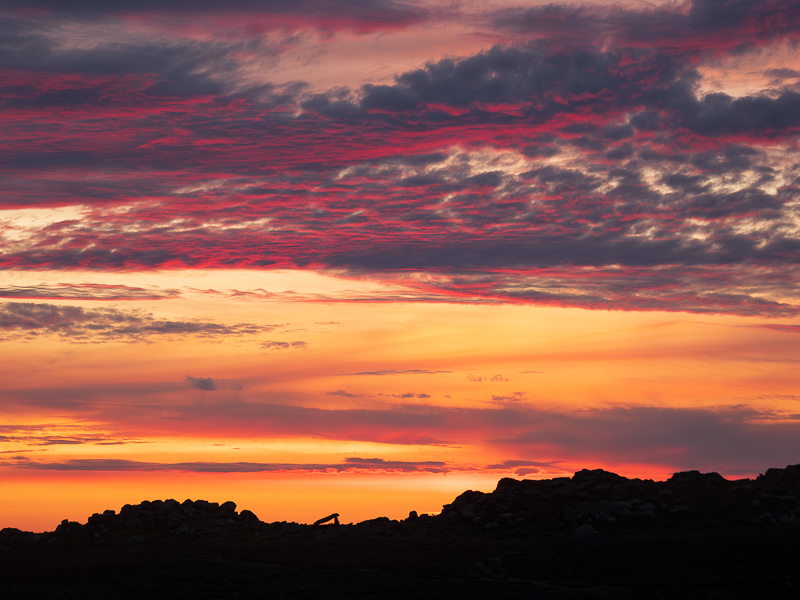
I realised on one visit that the burial chamber would be an excellent foreground against which to photograph the sunset – even if it was but a small feature in a big landscape. So, weather permitting, I have now walked there late in the evening several times to see what the sunset would bring. A few days ago I was in St Davids, exhausted after a day on the road visiting my postcard customers. The weather hadn’t been great but I could see a hint of something interesting in the sky as the evening drew on. I grabbed my camera bag and set off.

It turned out be a rather wonderful sunset. After the sun disappeared behind the headland all sorts of oranges and reds appeared in the clouds above it. The burial chamber was silhouetted nicely against this stunning backdrop. So, for a photographer who doesn’t really “do” sunsets, I seemed to have struck lucky again.

To read more Tales from Wild Wales as they are published, please click on the Follow button.

Is that really a thing? (…..or a stunning sunset over Cardigan Bay…..)

Panoramic image (two frames combined) taken eight minutes after the top one. (click to enlarge)

Last Monday I had to visit my postcard printers in Porthmadog, north Wales, and decided to make it an overnight trip. Leaving home on Sunday afternoon my journey felt rather aimless. The weather had been cloudy and drab for an extended period and there was no guarantee that it would be any better while I was away. I eventually ended up at Fairbourne , right at the mouth of the Mawddach estuary on the southern side – somewhere I very rarely visit. But as the evening slowly drew on I noticed a thinning of the cloud blanket in the west. I decided to go for a walk on the beach.

The sky was beginning to look positively very interesting with broken cloud of various types at different levels. The tide was low and a network of pleasingly shaped pools had formed in the hard sand of the beach. I actually ran back to the van to get my camera bag! Unheard of! I rarely take photos at sunset because the results can be rather predictable, but this, I felt, was an exceptional opportunity.

A few months ago I had bought a very specialised filter specifically for use at times like this. Looking towards the setting sun the light is brightest just above the horizon and gradually fades away towards darkness overhead. The reverse neutral density graduated filter is designed to counter the complex exposure changes that occur in such a situation. I was beginning to wonder if I would ever use it but there it was just sitting in my bag!

Over a period of about twenty minutes I took a series of images of one of the best sunsets I can remember ever seeing ; a complex cloudscape lit up in shades of yellow, orange and finally crimson – all reflected in the sweeping shapes of the pools on the strand. The hilltops and summits of the Pen Llyn extended across the horizon from left to right. Fairbourne itself is not a place of great beauty (or any beauty come to that) but in the right conditions the coastline there can be magical.

To be honest these were not difficult photographs to take. It was more or less a case of “1/125th of a second at f8 and be there”. I posted a couple of the results on an online photo forum and mentioned the use of the filter. One guy replied with the comment “Is that really a thing?” Well, yes, it definitely is a thing, and it works!

To read more Tales from Wild Wales as they are published, please click the Follow button.

Mr. Angry of mid-Wales..

It happens in the run-up to every election. I listen (and watch) in vain for anything relating to the environment in the BBC current affairs output (see here and here). Nowhere (with the exception of Channel 4) this year have I seen or heard any political party being tackled on their policies on climate change or nature/wildlife. It is as if there is a conspiracy of silence between the politicians and the journalists. Neither party is interested in discussing these things. Actually – I tell a lie: a couple of weeks ago I heard a trailer for exactly what I was hoping for – on the farming programme on Radio Four at 5.45 in the morning. Whoever listens to the radio at that time of day!

Last Thursday I happened to be listening to “Feedback” on Radio 4 which – in case you’re not aware – is nominally independent of the BBC. It features complaints and comments on the organisation’s output and often tackles senior BBC figures on important issues. The presenter read out two complaints from listeners about the complete lack of coverage of the large (very large apparently) ‘Restore Nature Now’ demonstration which took place in London towards the end of June. He/she reported that the BBC had been approached to answer these questions on air but had refused to do so. They just sent a short statement justifying their position.

I was furious! I immediately emailed Feedback with my own complaint about the BBC’s poor or non-existent coverage of environmental issues in its election broadcasting. I included the following points –

  1. How are voters concerned about the environment above all else (like me) supposed to know which way to vote? It is a complete dereliction of duty on behalf of the BBC, despite their ability to produce stunning wildlife documentaries containing powerful environmental messages.
  2. Millions of people in the UK are members of charities and pressure groups supporting wildlife conservation and renewal. All of us would dearly love to know what the political parties intend to do about these things but thanks to the BBC we are no wiser. It is disgraceful.

Well, fortunately, with a big thumbs up to Friends of the Earth and Greenpeace , we are now able to make a decision on which party to support. Between them they have examined the manifestos of the three main parties plus the Greens. It is the latter who top the ratings with an almost perfect score of 39 points out of 40. But you would never know it from their election publicity or their statements in the media. Why this fear of publicly putting the environment at the heart of every policy? The Lib Dems do pretty well too. Needless to say the Tories are by far the worst in every respect, although personally I believe their record over the past few years (especially under Boris Johnson) is not as bad as is made out.

Here in Ceredigion we have a Plaid Cymru MP, Ben Lake, who by all accounts is an excellent constituency MP. He was one of the very first to officially support Caroline Lucas’s Bill (now known as the Climate and Nature Bill) to put the environment first, which has not (yet) made it onto the statute book. But he has not responded to any of my recent correspondence on environment matters. Personally I have never trusted Plaid Cymru, as they tend to rely on the farmers’ vote in rural Wales. It was noticeable how Ben Lake made himself very visible at some of the farmers protests back in the winter.

So there you have it! If you have not yet decided how to vote in order to put the environment first, I do recommend looking at the FoE/Greenpeace document. There is a link to it below.

https://friendsoftheearth.uk/system-change/general-election-2024-manifestos-final-scores

To read more Tales from Wild Wales as they are published, please click the Follow button.

The advantages of insomnia.

Well, I can only think of one. Sometimes a visit to the loo before sunrise on a summer’s morning can present the photographer with scenes like this. The photograph was taken less than five minutes from my front door. Valley fog was slowly “flowing” down to the coast from the uplands; thanks to my inability to sleep I was able to get outside and take a few photographs. The sun had not yet risen above the Cambrian Mountains to the east so the light was soft and gentle.

While processing the image I found this lack of contrast frustrating at first. Adding the contrast it needed led to an unreal looking result. But that little light-bulb in my head said “think black-and-white instead” so I made the conversion. Because b&w is already an abstraction from reality I felt I could push the blacks and whites as far as they needed to go. Doing so would have been par for the course in the days of film. Having created the b&w version I then went back to the original file. Being a little more gentle with Lightroom’s sliders I produced a colour image I’m happy with. Which do you prefer?

To read more Tales from Wild Wales as they are published, please click the Follow button.

My website : http://www.wild-wales.com

Serendipity

I’ve just got back from a trip around Scotland with Jane, my partner. We spent a week on Mull and then went cross country to Perthshire where we visited some great friends. Photography-wise there’s no doubt that the highlight was a boat trip from Fionnphort on Mull to the islands of Lunga and Staffa. Here’s how it happened.

I have an unfortunate tendency to arrive early or late for appointments by either an hour, a day, or even a month. Yes, the latter has happened! We were staying in the campervan most of the time but I had booked one night’s accomodation in a “pod” on Iona, just a short ferry ride from Fionnphort. Not unexpectedly I got my days mixed up and found that we had a free day on Mull before the Pod was available. Our neighbour on the campsite had booked a boat trip to Staffa and Lunga on our free day so on the spur of the moment I looked online to search for spare places. To my surprise there were, and I booked them right away. A few minutes later I checked the booking and noticed that it was for the wrong day – the day we were booked in on Iona. Cue mega-panic! Late night messages to the boat company followed, and they got back straight away with the news that they would re-arrange it for the correct day. Phew……

The forecast was great for the trip with unbroken sunshine and light winds. We cruised northwards among the Inner Hebrides in perfect conditions for an hour or so before arriving on Lunga. This island was an unknown quantity to me but a few minutes after landing puffins could easily be seen amongst their burrows on its grassy edge. I didn’t realise what was to come a little higher and further along the coast.

The path wound up through broken rock and grassy slopes dotted with bluebells and other spring flowers. Puffins seemed to be everywhere and were more approachable than they are on the Pembrokeshire islands. Some were quite oblivious to any human presence. Two visitors ahead of me seemed to be photographing a low rock-face but there was actually a pair of puffins pottering in and out of their nest in a crevice just behind it. I could easily have reached out and touched them. They are absolutely enchanting birds and I make no apologies for presenting a photograph of them in all their cuteness. Perhaps we love them so much because they remind us of ourselves? (See the main pic)

Reluctantly dragging myself away I soon came to the end of the main path close to an auk colony. While the huge majority of the birds were on the far side of a precipice that didn’t stop individuals landing this side of it close to me and the other human visitors. I’ve never been in close proximity to a shag before but one landed nearby and stayed, allowing me to photograph it at length. One young woman was sitting on a rock outcrop and a razorbill landed next to her as if she wasn’t there. It was astonishing! I reflected on how easy it would have been for the early sailors to plunder these seabird islands for food as they explored the oceans. And no wonder the great auk became extinct – it didn’t even have the advantage of flight.

Most of these bird portraits were taken with my 24 – 100 mm zoom lens, not the long zoom that is normally obligatory for bird photography. I did, however, swap lenses to capture one of two arctic skuas which were patrolling around just offshore in an attempt to make unwary seabirds disgorge their food.

Arctic skua – much reduced in numbers following the avian flu outbreak.
Basalt columns on Staffa

We only had two hours on Lunga and before long it was time to return to the boat. I was exhilarated; it had been one of the best mornings of my life. By contrast, the island of Staffa, inspiration for Mendelsohn’s piece “Fingal’s Cave” and our second port of call, was rather a disappointment. The geology was extraordinary but time was very limited and visiting the cave was like being on a production line. Boat after boat was disgorging its passengers for half an hour and then leaving.

It was only through the series of mistakes I made that we actually got to Lunga at all. If I had had time to do some research I would probably have taken the shorter and cheaper trip to Staffa only. And if it hadn’t been for our neighbour at the campsite we might never been able to appreciate the wonders of this astonishing seabird colony. Serendipity indeed!

To read more Tales from Wild Wales as they are published, please click the Follow button.

My website – http://www.wild-wales.com