A Norwegian coastal cruise (Part 2) and some thoughts on photographing the Northern Lights.

The Aurora near Tromso; 1/8th sec, f4, 6400 ASA

Was there anything else? Oh, yes…….the northern lights! Unless conditions are absolutely perfect, a moving ship will be rocking backwards and forwards and from side to side, with engine vibration to add to the photographer’s misery.  There wasn’t any prospect of using a tripod for the long exposure that photographing the Aurora would require. I imagined that some sort of digital trickery would be available to solve the problem. I thought it should be possible to “stack” a burst (say 15) of shorter handheld exposures to simulate a single long exposure; similar to a technique used by astro-photographers to photograph the Milky Way, for example. The problem with this, I learned,  was that the subject was likely to be so badly under-exposed in a handheld “short” exposure that it would not be recognised by the sensor.  So, should the aurora be visible,  I was really left only one solution – bump the ISO (sensitivity) right up, hand-hold, hope for the best, and remove the noise in PP. I consoled myself with the knowledge that the Norwegian coast is renowned for its beauty, and that I probably wouldn’t be short of subject matter.

The M.S. Lofoten at Tromso

Weather conditions were ideal for the Aurora, and they were visible on four consecutive nights.  When geomagnetic activity is quiet (eg a Kp number of 2) the auroral oval lies across northern Norway and Tromso (its “capital”) is fast becoming a mecca for aurora hunters. At the end of the fourth day there was an extended stop in Tromso, and as dusk fell there was a definite air of anticipation and almost feverish activity around the quayside. Small vessels and coaches were loading up with people keen to see the aurora. I felt sure they would appear that night, and so they did. About 8.30 pm, as the ship cruised northwards, I noticed a waving, pale green ribbon high in the sky and before long there was a full-blown overhead display. I can’t say that it was overwhelming or breathtaking, though, and according to others on board it was quite a modest affair. It proved very difficult to photograph successfully, for the reasons explained above, and with crowds of other people all trying to do the same thing in a very limited space. I realised quite quickly it just wasn’t going to work. But I consider it a learning experience which will hopefully be useful at some stage in the future. One thing I definitely did learn was “Don’t try to photograph the Aurora from a moving platform”.

As far as processing the aurora images is concerned, it’s a bit a photographic dilemma (or to use current parlance  ‘issue’). Because of the way our eye works we do not see the aurora as vividly as the camera does. We have two types of sensor at the back of our eyes – rods, which are receptive to light only, and cones, which are colour-sensitive.  Rods are more sensitive generally than cones so we tend to perceive weak light sources like the aurora as a pale colourless glow rather than the overwhelming light-show that some photographs depict. What should our aim be in post-processing, then? The relatively subdued palette that we actually experience or the more colourful one which we know would have been there if only we could see it? I don’t actually have an answer but I was pleased that one of aurora images came out reasonably well. It is closer to visual reality than light-show, and whatever you do,  don’t examine it too closely……!

The Tough Guys in balmy waters near Bergen. Jerry two-hats in the red jacket. (photo: unknown, but thanks)

One final aspect of the cruise I must mention is the number of lovely, funny and interesting people I met on board. For the daily evening formal dinner you were allocated a seat for the trip with others speaking the same language, and that helps. Some of the passengers you have nothing in common with at all, of course;  some stayed indoors and read or played patience on their tablets, only emerging to go on deck for a smoke (you had to wonder what they were doing on the trip at all……). On the other hand some you met over and over again and struck up a real rapport with. In particular I had some real good times with Frank-Arild Spetland from the far south of Norway, celebrating his retirement; later joined by the bearded twosome, Richard and Ralf, from Stuttgart. All four of us tended to congregate on the upper deck aft where we watched the world go by in the lee of the ship’s superstructure. We ironically called ourselves “The Tough Guys”. Well, it was cold outside…..

So here’s to them in particular; and to Aude and Guillaume from Paris (both far less than half the average age of the rest of the passengers); and to John and Mary Ruston from Wallingford; and to everyone else who helped make the trip such a memorable experience.

Click here for Part One.

P.S. If you are reading this, Aude and Guillame, thanks for the card but I don’t seem to have your address……….

To follow Tales from Wild Wales scroll down to the bottom and click Follow

An inscrutable visitor from the Arctic

Snowy Owl, St Davids Head.

This snowy owl was first reported from St. Davids Head on the Pembrokeshire bird blog on Good Friday, and then again on April 3rd. It seemed to be elusive, to say the least. But the forecast for April 5th was good, and I overcame my usual inertia and decided to go for it.  It wouldn’t be the first snowy owl I have ever seen. The first was on Fetlar (Shetland) in 1985, one of the last birds from the breeding pair present there for a number of years. The second was on moorland in North Uist a few summers ago which may actually have been a plastic sack full of peat turves, so white was it and so little did it move! But a snowy owl in Wales! And (almost) on my home patch……

I arrived at Whitesands about 8.45 am and began the walk across to St Davids Head. After about half a mile I met a birder coming the other way. It was Mike Young-Powell, a local man whose patch I knew St Davids Head was. Obviously excited, he borrowed my phone to get the news out. He had seen the bird on a rocky outcrop just a few minutes previously. I headed back with him to relocate it, and it suddenly took flight from maybe twenty yards away from us. For such a large white creature it could be surprisingly inconspicuous.

It settled amongst tussocks in the valley bottom, with only its top half showing, unfortunately. We watched it from a distance while Mike waited for his wife and friends to arrive, and then he gave me the go-ahead to get closer. I apologised in advance in case I disturbed it……

I soon got to a point on the other side of the valley where the light was better and began to creep closer, stage by stage. The owl clearly knew I was there but didn’t seem at all anxious. At each point I watched her for a few minutes and took a few pictures. I peeped over a clump of brambles and bracken, and just watched. It was quite an intimate moment, and I felt truly honoured to be in her presence.  She seemed quite relaxed, blinking in the sunshine and looking around from time to time. When closed her eyes looked like little smiley black slits in a round white face. Talk about inscrutable! There was something about a sumo wrestler about it. Much too soon, however, my presence became too much and she flew off.

I expected some flack from the other birders when I returned to the path but they were fine.  Continuing up valley I rounded a corner and the owl exploded away from her perch on the ground about twenty yards away. She flew some distance and landed on a rock, where she was harrased angrily by a raven and chased back towards us. She landed on the hillside opposite, about half way up Carn Llidi, much too far away for a binocular user like myself. From this distance and with only 10×40’s, she appeared grey all over with a white face. I settled down and waited for her to make a move. Seven hours later she was still there.

During that time she shifted around a bit, and those with a scope would have found the minor details of her resting period fascinating, I’m sure. For me the most interesting thing was the behaviour of two ravens. One made a sudden right angle turn and flew over to the owl, landing briefly on a rock about ten yards away. Another inspected the owl carefully from above. Neither of them could ever have seen a snowy owl before, and probably didn’t know what to make of it. Perhaps the owl was too near to the nest of the angry bird mentioned earlier.

Eventually I got too cold to wait around any longer and drove home. I downloaded the pictures into Lightroom yesterday and found to my relief that one of the closest pics was sharp. I cloned out two grass stems which fell across the birds face, and cropped the image fairly drastically for the above portrait. The quality at 100% is still pretty impressive! It is noticeable how brown the barring is on its upper breast compared to that on its crown. The afternoon had been pretty frustrating, but what a morning! This has to be one of the most amazing birds I have ever seen.

PS : Many thanks to Alastair and Jill Proud for the sandwich and Welsh cakes…..

To follow Tales from Wild Wales please scroll down to the bottom and click Follow.

My annus horribilis

It is probably not the done thing to blog about one’s failures. Like the Christmas circular letter a blog will normally only contain details of the writer’s achievements. There have been successes over the last year for me to look back on, of course. My exhibition at Plas Brondanw, for example (see this post),  the “highly commended” image in the 2017 British Wildlife Photography Awards (see here), and my involvement in the Fay Godwin “revisited” exhibition at Machynlleth (see here). But more than anything else the last year has been characterised by disappointments, and I’m beginning to ask myself “is there life after photography?”

For a number of years now I have been working on a book about Welsh wild places and wildlife. There is currently no sign that it will ever see the light of day;  I have already been through four publishers and am on my third author. I wrote about the end of the first attempt (spring 2013) in this blog post. There followed another attempt with a different author where I was quite comprehensively shafted by Publisher No 2. Things were looking good with Publisher No3 and another author; this time it was Jon Gower, with whom I had successfully collaborated on “Wales at Waters Edge”. We had had several positive meetings with the publisher and they had applied for, and been offered, grant support from the Welsh Books Council for the book.

Then in February 2017, everything went pear-shaped. There were major changes at the publisher; in order to concentrate on the printing side of the business, eight staff in the publishing department had been told to apply for four posts or take redundancy; no guarantee about books “in development” was offered. All existing staff took the money and ran and Jon Gower, understandably, vowed never to work for that publisher again. He approached Publisher No4, and in May they agreed, in writing, to a October 2018 publication date. As a result of this I continued working on the project right through until late autumn by which time 95% of my work was complete. I had a meeting with them in late December at which a timetable and other details were discussed and many agreed. An application for grant funding had been submitted.

Earlier this month there was a phone call from their English-language editor. They had changed their mind and no longer had any interest in the book.

So onto other things. At the Fay Godwin exhibition I was approached by William Troughton of the National Library of Wales and asked if I would be interested in having a retrospective there. To say that I was surprised and honoured was an understatement! I didn’t think I was quite old and wrinkly enough but no matter – the Gallery at the Library is huge and he made it seem like a formality. There followed a couple of meetings and then he put in an application to the Library’s exhibitions committee.

In October I was told that this had been turned down.

In January 2017 I put in an application to the Arts Council of Wales to attend  the Open Studio Workshop in the North-west Highlands to begin to develop a new  book/exhibition project. The application was successful and the workshop took place in March. I was excited to be attending because amongst the tutors were two of my landscape photography heroes – Joe Cornish and Paul Wakefield. Despite me being quite clear about what an early stage the project was at, the latter was unreasonably and publicly critical at great length over the work that I showed. I was shocked and deflated, and have not yet been able to rebuild my confidence about the project.

During the years I worked with Gomer Press (Publisher No3) it had always been the case that a verbal offer or agreement was as good as a written contract. I built up an excellent track record for completing book projects on time (unlike some of the authors I collaborated with…..) and working successfully with designers and other print professionals.  I am sure they would agree that this was the case. I have a long history of exhibiting my work and my record there is equally well proven. But over the last few years I have unfortunately had dealings with more than one prima-donna-ish author and disreputable publisher. The requirement for mutual respect that I have been used to seems to have vanished into thin air.

Whether any of the three projects I mentioned above will ever now happen I cannot say. Jon Gower and I may still try other publishers for the “wildlife and wild places” book but between us we are running out of options. For my part, not for the first time, there is a feeling that ‘it just won’t ever happen’.

So that is story of my year. An annus horribilis indeed; but at least there hasn’t been a serious fire at one of my castles……….


To follow Tales from Wild Wales, scroll down to the bottom and click Follow.


Repeat until it gets dark……

Porth Ysgo (recent)

In summer 2011 I discovered Porth Ysgo, a tiny cove near Aberdaron at the tip of the Lleyn peninsula. I was working on Wales at Waters Edge, my book about the Welsh coastline. It took me a while but eventually I noticed that the beach was littered with extraordinary rocks. It wasn’t so much their shape – although there were some interesting ones – but their colour; when wet they were pitch black. I used a heavy ND filter to slow down the wave motion and create a frothy foam which contrasted strongly with the solidity of the rocks. One picture appeared in the book and I vowed that one day I would go back.

Porth Ysgo (from Wales at Waters Edge)

Well it took more than six years but I finally made a return visit last week. I met up with my old friend Brian Boothby, a very fine musician and photographer, and it was with a growing sense of excitement that I descended the steep steps down to the beach. Conditions were just about right – a receding tide with a fresh onshore wind.  On this occasion I didn’t mind the cloud cover. I put the camera on the tripod immediately, fitted the ND filter and started shooting long exposures. I very rarely use it otherwise but live-view is brilliant in this situation. It gives an “actual exposure” simulation while the image in the viewfinder is virtually invisible thanks to the heavy filtration.  It all went well for a while until I noticed that I was getting some massively under-exposed images. I checked all the settings but still no joy. Then I realised what the problem was. Having set a two-second self timer to prevent camera shake, I then took my eye away from the viewfinder. Light entering the viewfinder during an exposure of several seconds was affecting the automatic meter reading by about two stops. In other words, it was cutting the exposure to something like a quarter of the correct one. It seems odd that this should be possible. Can someone explain it?

So the solution was simple. Once you have found your location and accepted that it is usually pot luck with long exposures, this type of image is actually quite easy to create:

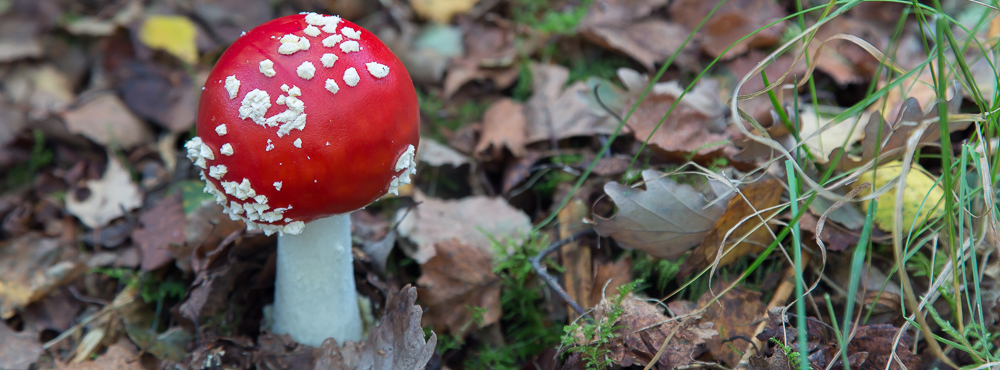
Use live-view to compose the image.  Set the self-timer. Wait until a likely looking wave begins to enter the frame. Place the thumb over the viewfinder. Press the shutter. Repeat until it gets dark.

In fact, Brian had been exploring and found another tiny cove nearby with more extraordinary black rocks.  This time they were larger, more sculptural, and placed randomly on the shore, almost like surreal chess pieces. There were also some massive square-ish blocks, each the size of a small car, piled on top of each other well above the waterline. But salt spray was filling the air.  I managed a few more long exposures, then began to enjoy the sheer exhilaration of the conditions as darkness began to fall. Who needs photography on an evening like this?

Edit: but it’s always nice to come back with a trophy or two………


To follow Tales from Wild Wales, scroll down to the bottom and click Follow


Role reversal

Grey phalarope, Aberystwyth

I had some reading to do this week, so rather than stay at home to do it – with all the consequent risks of coffee, biscuit and chocolate consumption, I decided to take myself off into Aberystwyth, sit in the van, and do it there. It was one of the many recent showery days and I thought there might be a chance – just a teeny chance – that sun and shower might conspire to produce a rainbow, and that I might be in the right place at the right time. As an additional incentive, there was the possibility of finding migratory seabirds blown onshore by recent winds. In particular, I was keen to see a grey phalarope – one of which species had been seen in a ditch behind Tan-y-bwlch beach a few days earlier.  During the breeding season male phalaropes incubate eggs and care for the young, while females then seek another male with whom to have more offspring. Any phalarope seen here, however, will be on migration; but even then they are a rare visitor.

Parking by the harbour I took a walk along said beach, had a look at the ditch and saw nothing. No surprise there then……. I decided to wait in the van and scan the harbour for new bird arrivals every so often while I read. If the sun emerged I could walk out along the concrete jetty for a more open vista. The afternoon passed uneventfully; several times it looked there might be a rainbow but my optimism was misplaced. By about 5 pm I had had enough and scanned the birds in the harbour again before I headed off. Some black-headed gulls had flown in and…..oh….what was that tiny white and grey bird on the edge of the flock? A little gull? No, it was a grey phalarope! For once, I felt, my luck was in. I must have had a huge grin on my face.

I grabbed my long lens and rushed round to photograph this scarce visitor. As I crossed a narrow gravel beach towards it I looked up and to my surprise ALL the birds had gone!  At that moment a yell of “You did that!” came from a woman on the road with binoculars. She was right. Phalaropes are well-known for their approachability but the gulls must have been spooked and the phalarope went with them. I was crest-fallen and climbed back up to apologise for my clumsiness.

Fortunately the phalarope did not go far and was soon back on exactly the same stretch of water. I had another go at a closer approach but it was very skittish. In between flights I got a few reasonable photographs of the bird before it got too dark. During the evening I posted the sighting (with picture) on the Ceredigion Bird Blog.

The next evening I had a phone call from one of the most experienced local birders – a chap called Chris Bird (really…) . He wanted to know more about the phalarope sighting. Not that he doubted my word : the photograph was conclusive. No, he had been on the other side of the harbour at exactly the same time and hadn’t seen the phalarope. He had spent some time that afternoon carefully searching amongst all the boats in the inner harbour for a phalarope. During the mini-drama of my attempt to get a photograph of the phalarope he was talking to another wildlife photographer about phalaropes. I couldn’t help smiling to myself. It cannot be denied that there is an element of competitiveness involved in birding, and it would normally be me who was looking the other way when the rare bird flew past.

To follow Tales from Wild Wales, scroll to the bottom and click Follow.


Tea and Brasso (Part two)

Boston Lodge b&w No 1.

My first attempts at photography in 1968 (see Part One) were in black and white, naturally enough. Colour photography was a bit of specialist pastime in those days and the materials were of rather poor quality. I had the use of the school darkroom and experienced the excitement of watching my prints slowly becoming visible in a tray of developer. I have always felt that b&w was a suitable medium for railway photography in the last days of steam. There was nothing glamourous at all in the subject matter and arguably very little that colour could add. The school darkroom was demolished very soon after I started using it, however, and thus ended my first stab at photography.

Boston Lodge b&w No 2.

My father continued togive me his old cameras as he upgraded to something more up-to-date. So I also became a Praktica user. By the early 1970’s, colour materials must have become easier to get hold of, and develop-and-print packages more affordable, because I never went into a darkroom again. It was colour negative all the way for me.  The film went to Boots, or, more likely, Max Spielmann for p&p. At that time  I was just messing around with cameras really, just having fun. I can remember a game I played with another student where we pursued each other around Nottingham city centre, each one trying to take photographs of the other without being seen.   Although I gradually took my photography more seriously it never occurred to me to use anything but colour. My philosophy was simple : we live in a colour world, so why photograph it in b&w? Most serious photographers, on the other hand, would have been using monochrome. One exception was Ernst Haas, whose crowning achievement (first published in 1971) was the Creation, produced entirely in colour.

Boston Lodge b&w No 3.

But, to coin a phrase, I digress. Most of the photographers that have inspired me (Ernst Haas, Paul Wakefield, Joe Cornish, Chris Gomersall, and others) have worked entirely in colour,  while one in particular only did so in her later years. I refer to Fay Godwin, who I have already mentioned in this blog a number of times – here, for example.  Her best known and most influential work was done in monochrome in the 1970’s and 80’s. I began to wonder if its particular power could have resulted from the use of monochrome. Perhaps the messages she was trying to convey came over more clearly without a sheen of colour to distract the mind/eye? So I began to think about doing b&w conversions of my own originals. Just for starters, I decided to convert some images from my recent visit to the Ffestiniog Railway at Boston Lodge. As I mentioned above I have always felt that b&w was ideal for steam railway photography.  Only those aged 60 or more will personally remember the last days of steam and the photographs from the era, which were inevitably monochrome. It could be that there is an element of nostalgia involved but I suspect it is more than that.

Boston Lodge b&w No4

Last weekend I was up in north Wales and frustrated yet again by some dismal (but very typical) August weather.  On a still and humid Sunday morning there were patches of mid-level cloud wrapping themselves around hilltops and mountain-sides. The landscape photographer might take some spectacular images if the sun broke through a broken layer of high level cloud. The latter looked thinner at the coast so I headed down to the Cob at Porthmadog; the view to Snowdon from its southern end is an iconic one.  Long distance visibility from there was limited, unfortunately, but just a few meters away in the other direction lay Boston Lodge, and it looked stunning! As the railwaymen prepared the engines for the new day’s work I had another short session photographing them “contre-jour” before the sun disappeared completely.


To follow Tales from Wild Wales, scroll to the bottom and click Follow.

Tea and brasso.

Early morning at Boston Lodge.

I first picked up a camera as a schoolboy. My father gave me his old rangefinder after he bought himself his first Praktica.  He had introduced me to trainspotting a few years earlier and 1968 saw the dying days of steam power on main-line railways in Britain. I spent as much time as I could that summer travelling around northern England to see and photograph the last steam engines still in operation.  On the last day of steam – 15th August if I remember correctly – I officially gave up trainspotting and put my Locoshed book away for the last time. With the photographic vision and skills I now have how I wish that I could travel back in time to those days when grimy and unloved steam engines could still be found.

I have since then retained a broad interest in railways, and Wales has an abundance of preserved narrow-gauge lines. In fact, Porthmadog is the hub of quite a narrow-guage steam network with the Ffestiniog and Welsh Highland lines terminating there. Last week I decided I was man enough to do some railway photography again: man enough because I needed to overcome my concerns about being seen as a train nerd. So one evening recently I wandered in to the Boston Lodge works/engine shed of the Ffestiniog Railway as one of the last engines of the day was being “put to bed”.  I gingerly approached the railwaymen to enquire about getting access the following morning, and was told that I would need to speak to the Works Supervisor who would be on duty from 7 a.m. I was there at half-past seven, only to find no-one in the office but railwaymen (and women) preparing several engines for the day’s duties. I couldn’t help noticing several people polishing the engines furiously – something that you would never have seen on British Rail in the 1960’s.

Once I did find someone to report in to I was surprised at how relaxed the regime was for visitors – “Oh just sign in, and mind where you’re putting your feet” I was told. Very refreshingly there was no  “elf’n safety” paranoia here. I cautiously began exploring the sheds and sidings. If you’re interested in steam engines you will know this already but the first job in the morning is to light the fire. Once this is done the engine is driven gently out into the open for the fire to take hold and steam pressure to build up, and for more polishing to be done. Everyone had a tin of Brasso to hand, and there was a cupboard full of the stuff inside the shed. Mugs of tea were also well in evidence. In the midst of a downpour, a swallow chased a butterfly in the grime and smoke of the engine shed.

I was casually looking into the cab of one of the engines when the fireman leapt in through the opposite door. Although dressed in grimy dark blue overalls, like most of the men, this was clearly a woman. I asked what the attraction was for her in firing a steam engine – “it’s just something completely different to what I normally do” she said. And what was that? “Oh, I’m a teaching assistant in a school for autistic children”.  She paused for a few seconds. ” Although, come to think of it, compared to some of the volunteers we get here, there isn’t actually that much difference.” Train nerds, you see. I saw her later, at lunchtime, having worked all morning, on her second round trip of the day. Her teeth gleamed white from a face caked in sweat and coal dust. “One of the best fireman on the railway”, said the driver.

Here’s one I prepared earlier – Taking on water at Tan-y-bwlch station

The main attraction at Boston Lodge was, of course, the presence of the engines. The railway staff must have been accustomed to railway photographers, though, because they seemed quite unselfconscious subjects themselves.  It probably helped to have a chat: one driver – in real life an English teacher at a school in Switzerland – was back at the Ffestiniog for his thirty-second year, while another man told me proudly that it was his fourty-ninth year as a fireman. One pointed out an osprey hovering over the Glaslyn river as it hunted for fish to take back to its family a few miles away. I found I was often able to include them and in fact, some human interest really seemed to lift the images. The results were far from traditional “steam engine at 45 degrees”and one could say were more social documentary in nature. I have a feeling there is more to be done on the Ffestiniog.


To follow Tales from Wild Wales, please scroll to the bottom and click Follow

Bird/land rides again

Bird/land is showing again this summer, at Plas Brondanw, between Penrhyndeudraeth and Beddgelert in the heart of the Snowdonia National Park.

Set in a stunning location, Plas Brondanw was the home of the late Clough Williams Ellis – creator of Portmeirion,  the surreal Italian-style village on the Dwyryd estuary. The gardens at Plas Brondanw have been open to the public for many years but this is the first year the house has opened its doors. It is a very different venue to those at Machynlleth and Aberystwyth. Each room contains maybe 6 or 8 works, punctuated by windows which overlook the gardens and the surrounding landscape. But I think they work well there.

The official opening is on Sunday 30th – details above – and I will be giving a talk on Sunday August 13th, at 2.30 pm. Places for both events genuinely are limited. Opening hours for the exhibition are Wednesday to Sunday, 10.30 am until 4 pm. The exhibition closes on August 28th.

Edit: In the first paragraph I wrote that Plas Brondanw is in the heart of the National Park. It certainly feels as if it is, but in fact it’s on its edge. North and east of Porthmadog the National Park boundary diverts inland to exclude the village of Penrhyndeudraeth and the low-lying farmland drained when the Cob (the causeway to Porthmadog) was built just over two hundred years ago. One can only imagine the exquisite beauty of the area before it was drained. Even now at big spring tides on still days the mountains are reflected beautifully in the flooded Glaslyn River. And who knows, in these times of sea-level rise and “managed retreat” the day could come again when this land is fully tidal again.


To follow Tales from Wild Wales, scroll down to the bottom and click Follow

A silver-studded Saturday

Male silver-studded blues, the Great Orme

I didn’t mention it in my last post but the van broke down on the way back from Pembrokeshire. It had been feeling and sounding particularly rough the whole journey and a few miles south of Aberystwyth it started to become difficult to engage gears. I nursed it back up the long hill to our house in second, and rolled it down to the garage the following day. It is still there, 12 days later; virtually untouched. The garage proprietor still doesn’t know if it is the clutch that has gone or the gearbox; so it’s either going to an expensive repair or a horribly expensive one.

He loaned me his “courtesy car” over the weekend – an X-reg Proton. Quite a comedown, as you can imagine, and you definitely can’t cook or sleep in it. Nevertheless it got me up to Llandudno and back at the weekend, where I was planning to visit the Great Orme. This is a massive limestone headland overlooking Llandudno with long stretches of white or pale grey cliffs facing in all directions. Its grassland is home to many interesting and rare plants and animals, including the silver-studded blue butterfly, which is uncommon nationally but appears in huge numbers on the Orme. The last week in June is supposed to be the time to see them. They were certainly widespread and numerous but not occurring in quite the clouds I had been hoping for /expecting.

It’s a long time since I have done any insect photography and I don’t have any specialist equipment for it. I was relying on my 70 – 200 f4 zoom which has a closest focus of four feet. The silver-studded blue is a tiny butterfly, well under an inch across, so even at maximum magnification an individual was very small in the viewfinder. But on the plus side the lens is very good optically and I knew I would be able to crop down into the image significantly. The butterfly is very skittish when the sun is shining so getting much closer than four feet might have been tricky anyway. So as far is gear was concerned it was a case of swings and roundabouts.

Male (left) and female silver-studded blues

What about the butterfly, though? The Orme silver-studded is a distinct subspecies, (“plebejus argus caernensis”) appearing about a month earlier than those elsewhere in the UK. The males and females are completely different in appearance; the males blue, the females largely brown – but far from dull as the smaller picture shows. In bright sunshine they seem to indulge in a great deal of apparently random flight – a far cry from the graceful and purposeful behaviour of our larger and more familiar species. It can only be down to one thing – sex. The males are desperate to find females, and copulating couples seem to be everywhere. But in more subdued light they tend to stay put, exposing their uppersides to whatever light is available. And during heavy cloud cover they just seem to shrink away into the vegetation and disappear. It is said that they rarely move more than 20 metres away from their place of birth at any time during their lifetimes.

The adult butterflies don’t seem to pose prettily on flowerheads to any great extent; anywhere will do. So the photographer needs patience to obtain that perfect composition. I struggled at first, I must admit. But as thin cloud covered the sun and they became less active, I came across a little congregation of five males on bramble flowers. This was the opportunity I had been waiting for. Even here I managed to take some rubbish. Depth of field was very limited  and it was easy to focus on a butterfly’s body and find the edge of its wing was out of focus. Backgrounds were often untidy. I really, really wanted to do some wide-aperture, out-of-focus-background type images but it was a lost cause. I needed as much D-o-F as possible to get even this tiny butterfly in focus.

The butterfly’s life-cycle is extraordinary: from the moment the eggs hatch until the adults are ready to fly the caterpillars are tended by black ants. The ants carry the caterpillars into their nests and protect and look after them.  Even when the caterpillars emerge to feed the ants accompany them. In return the ants feed on a sugary solution excreted by the caterpillars. The more I learn about nature the more complex and intertwined it all becomes. A web of life, indeed.

To read more Tales from Wild Wales, please scroll down to the bottom and click Follow.


As seen on Springwatch…..

Swallow’s nest (with flash)

Last week we hurtled down to Pembrokeshire in the heat. Jane had an event to attend in Haverforwest and I wanted to do some bird photography in the Marloes area. We had an evening boat trip lined up too, which took us into the bays on the north and south coasts of Skomer Island amongst all the seabirds.

I headed out with my long lens on Wednesday morning and spent some time around the Deer Park. There were two family parties of chough in the area and a group of adult non-breeders. After a couple of hours I headed back to Lockley Lodge for some coffee, and then into the nearby Marine Nature Reserve building with its illuminated displays and pilot whale skeleton. The main attraction for me here was the swallow’s nest built into the eye socket of the skull, which had earlier been featured on Springwatch. I was delighted to find four large, bouncing, baby swallows being fed frequently by their parents, despite regular interruptions by human visitors. There was another swallow’s nest in the ladies toilets next door, apparently, and I had previously seen a couple in the gents; so I guess this particular pair was more discerning than some of the others……

Adult leaving swallows’ nest (no flash).

Unless the doorway was almost blocked the adults took no notice of people at all; and with the nest at little more than head height this was an opportunity not to be missed. I set up the tripod in the corner of the room and attached the camera and long lens. But boy, was it dark! Even at 3200 ASA I was exposing at slower than 1/100th second. It would be nice to think that I could capture the young gaping excitedly (but without moving) on the nest while the adult hovered artistically beside them with food but it just wasn’t going to happen. Time for Plan B.

Flash.

I never use flash. I don’t have a flash gun and my 5d3 definitely doesn’t have one built in. Maybe the 6d (back in the van) had a built in flash? It was worth a try; but no joy. Then there was the little Panasonic GX7 which I carry around with me when I can. Yessss! I was in luck. After a long time fiddling around with menus I finally worked out how to use it. You press the button and the flash pops up. Surely it can’t be that easy…..?

With the 5D3 and other SLR’s (I imagine) you press the shutter and keep pressing – the result being a burst of images which capture the action at up to 12 frames a second – although the 5d3 is rated at 6 fps and seems slower than that. With the GX7 it’s one frame at a time; that is, in this situation, one frame each time the parent brought food for the young. Fortunately the feeding visits were coming thick and fast and I never had long to wait. I wouldn’t say I’m totally happy about any of the results, however. Technically those with flash are much better, but I didn’t quite get the composition right on any of them. Those without might be artistically more pleasing but those conditions were really was pushing the camera beyond its limits, even one as capable as a 5D3. It was difficult to process any of the images to any meaningful extent without degrading the image even further into unusability.

Nevertheless it was lovely just to watch the young begging enthusiastically for food, and the adults bringing it in so fearlessly. I love swallows and it is a source of sadness that they no longer nest in our garden shed.


To follow Tales from Wild Wales, scroll right down to the bottom and click Follow.