At the end of part two (click to read) in this series I asked rhetorically what NRW (and the fire service) were doing in the Rhinogydd during the wildfire there in July this year. Shortly afterwards an article appeared on the Cambrian News website, and I wrote following response:
The fire started on Thursday July 9th (not the 12thas your article stated) when, allegedly, a gas stove being used by a wildcamper was knocked over and set fire to nearby vegetation. It spread, as they say, like wildfire. At some point over the weekend the farmer at Cwm Bychan (or perhaps the landowner) called in a helicopter pilot to extinguish the fire on his land, which he successfully did. The pilot offered his services to NRW in order to extinguish the fire on Crown land nearby but they turned his offer down, claiming that he was not qualified to do so.
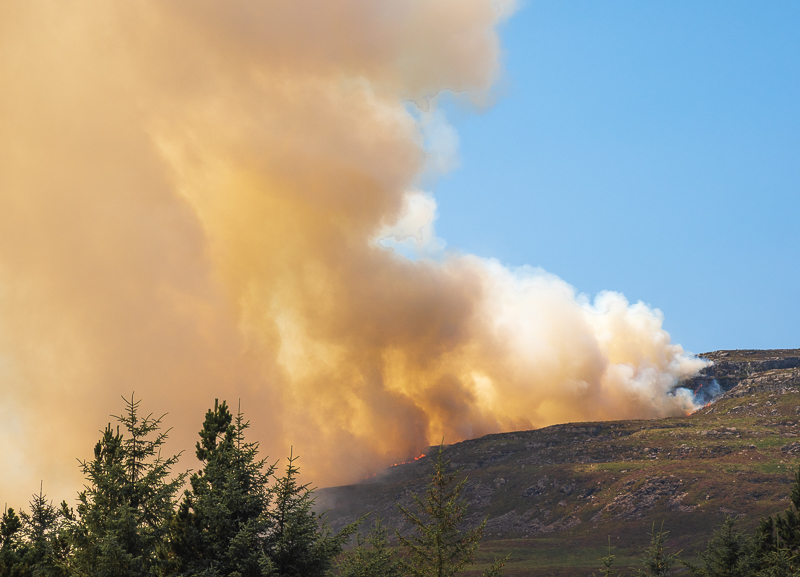
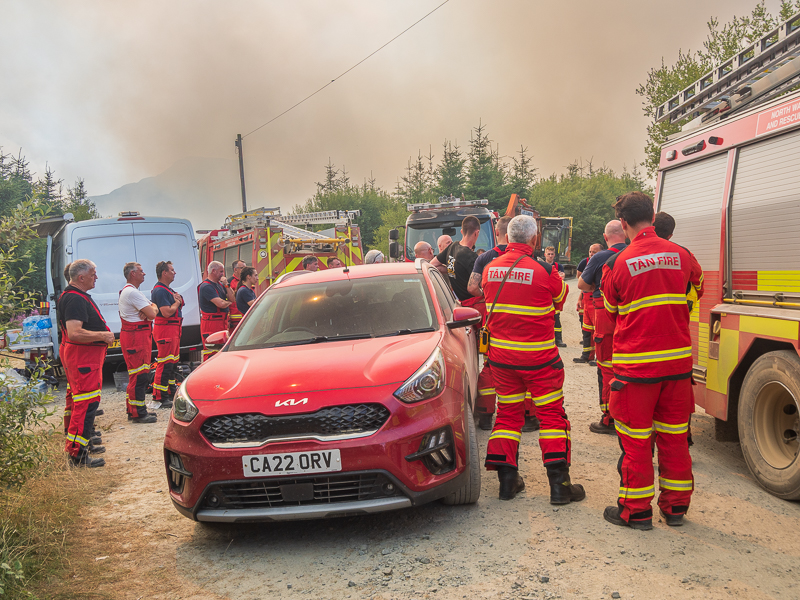
By Monday morning (July 13th) the fire had spread from Cwm Bychan eastwards into the Rhinogydd National Nature Reserve and by that afternoon seven fire engines were present in Cwrt forestry plantation to the east of the mountains. But what were they doing there? There seemed to be no attempt to prevent the fire spreading further into the NNR.
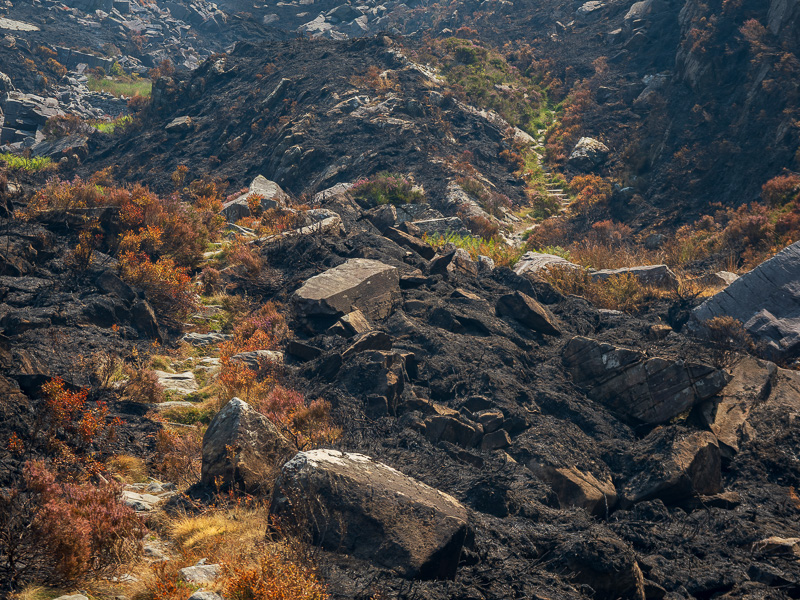
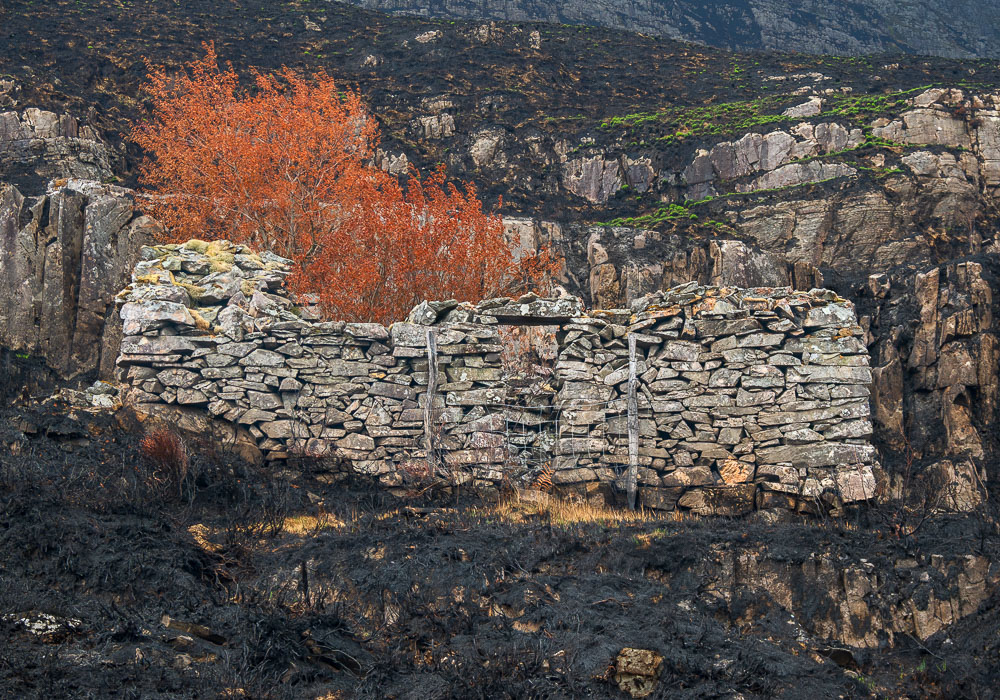
By Tuesday afternoon (July 14th) the fires around Cwm Bychan were more or less out but the whole east side of Rhinog Fawr was ablaze and there had been no apparent attempt to put it out. So what exactly had the Fire Service and NRW been doing all that time?
A little bit more about Rhinog Fawr; it is a National Nature Reserve, Special Area for Conservation and Site of Special Scientific Interest. Furthermore, “because of its remarkable natural condition” it is also a Wales’s only “bioenergetic reserve”, so described because it is “one of a network of special sites across Europe chosen for their importance to try to preserve the genetic variety of European wildlife species – in this case heather”.
But not important enough for NRW to attempt to save the vegetation from fire, clearly. I believed that NRW and the Fire Service were doing nothing more than attempting to retain the economic value of the timber in Cwrt Forest. This was confirmed in a press release from the Welsh Government issued on July 23rd about wildfires in Wales. Among acres of verbiage it stated that in the Rhinogydd “key forestry assets have been protected.” I myself visited the area recently and saw the firebreaks which had been bulldozed along the eastern side of the plantation, which had been largely successful.
Since the fire NRW was widely criticised for being incompetent. But it is more than that. NRW is completely dominated by procedure and bureaucracy. It could not engage with a helicopter company actually on the spot, and qualified to put out wildfires, even in an emergency, because it was not on an approved list of contractors. NRW is also the result of an ill thought out merger of three different bodies, with three different priorities – forestry, water quality and nature conservation. It is not difficult to work out which of those three got the shortest straw in the new organisation.
Looking at the bigger picture, climate change deniers would also claim that this fire was the result of carelessness, rather than climate change; a wildcamper – who shouldn’t even have been there – knocking over a stove. Well yes, but how careless have we been to perform an unimaginably massive experiment in changing the composition of the atmosphere when for decades we have been warned what the result would be.
Climate chaos.
To read more Tales from Wild Wales as they are published please click the Follow button